Frozen Dairy 101
A breakdown of everything you'd probably break down and eat regardless
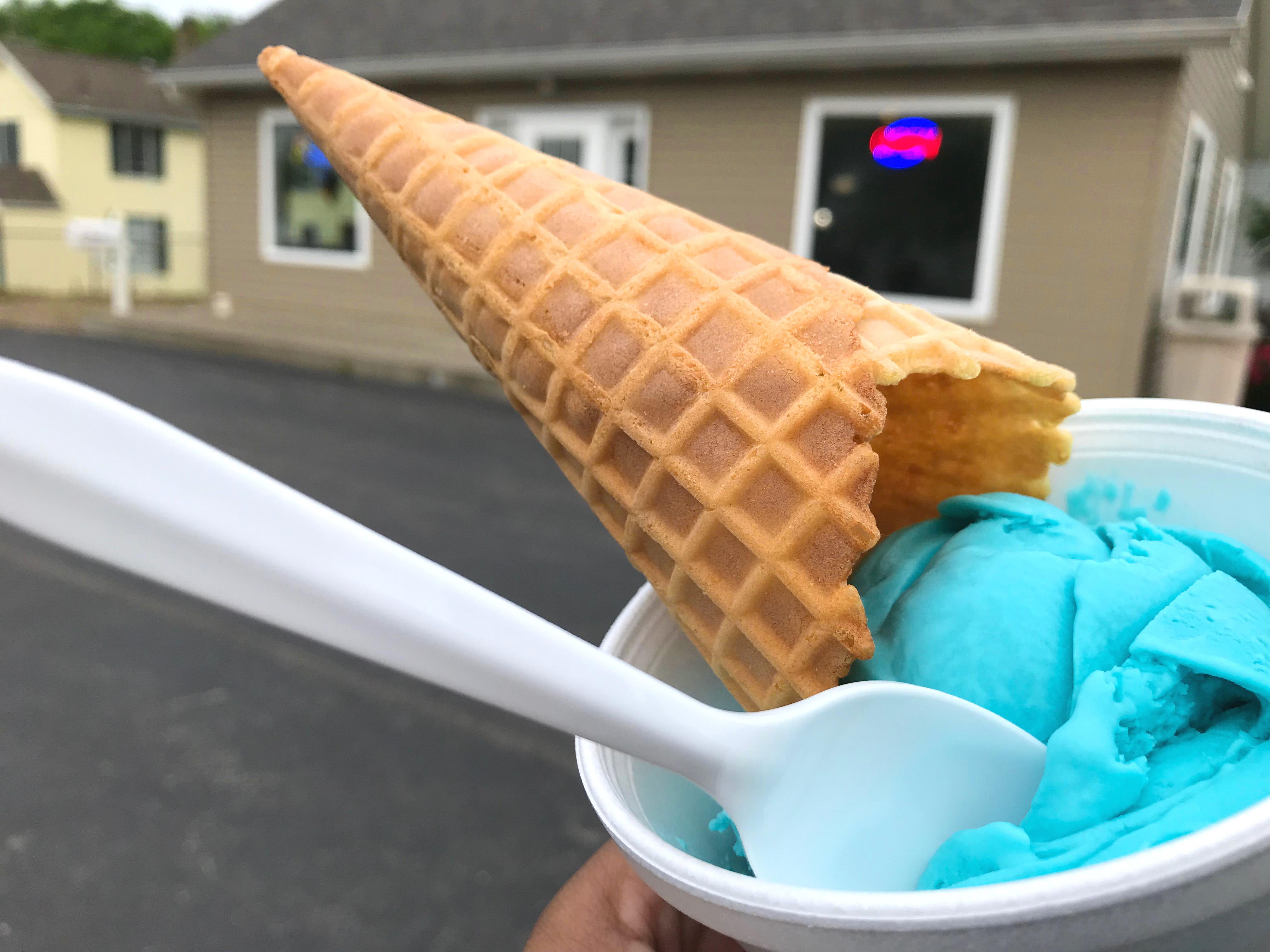
There are several legitimate reasons one might scream. Traffic jams. In-laws. The sudden loss of a pet chinchilla. But there is one thing specifically that you scream, I scream, and we all scream for. And that thing, of course, is ice cream.
But perhaps that's oversimplifying it. Nowadays, one might get flustered over frozen custard. Or emotionally crescendo for gelato. Same difference? Au contraire — there are key distinctions to be made between our favorite frozen dairy fare. The chemistry and physics behind it can get pretty sophisticated — but don't worry; we won't turn this into a dessertation.
Milk, for all it's worth
To understand the composition of frozen dairy desserts, you must first understand the main components of milk: water, milk solids (the sugar lactose, minerals, and proteins), and milk fat (also referred to as butterfat). In milk's natural unpasteurized and un-homogenized state, the majority of the butterfat is concentrated in a layer of cream, which doesn't readily associate with the watery skim milk layer below (butterfat molecules are kind of elitist).
The vast majority of milk that is commercially sold undergoes homogenization, which busts the fat globules to bits under high pressure and redistributes them evenly throughout the liquid for a more universalized richness of flavor. Figuratively, it's socialism; chemically, it's called an emulsion (mingling two things that don't normally mingle).
Structurally, ice cream and its relatives require another element — air bubbles. However, homogenized milk is a pretty stable emulsion, meaning it doesn't separate easily. To derive ice cream and its relatives from homogenized milk, that emulsion must be destabilized only to undergo another emulsion (so the fat globules cling together again and to make room for the air bubbles). A spinning paddle called a dasher whips air bubbles into the ice cream mix (milk, cream, and sugar) as it is frozen, reshuffling the molecular bonds so that a "scaffolding" of sugars, ice crystals, and fats forms around them. Added ingredients called emulsifiers and stabilizers keep this delicate structure sound.
Much ado about fluffing
Is all this science melting your brain more rapidly than a hot fudge sundae? The (legal) definitions of frozen dairy desserts are really only based on two criteria: fattiness (butterfat content) and fluffiness (air content, or "overrun"). Products with more butterfat and less overrun will taste richer and have a denser texture, whereas those with less butterfat and more overrun will be lighter. According to the FDA, a product must contain no less than 10 percent butterfat, no more than 100 percent overrun (i.e. it cannot be fluffed to more than twice its original volume), and weigh no less than 4.5 pounds per gallon to considered ice cream; otherwise it falls under the catch-all category "frozen dairy dessert."
Obviously, not all ice creams are created equal. Economy ice creams meet bare minimum legal standards (think generic school cafeteria ice cream cups); standard ice creams (overruns of 99 percent to 51 percent) occupy the bulk of most grocer's freezers (Edy's, Breyer's, Perry's etc.); more indulgent premium ice cream varieties contain less than 50 percent air and around 14 percent butterfat; super premium ice cream varieties are even richer. All ice creams initially finish at a soft serve consistency (~21 degrees Fahrenheit); hardening drops ice cream to around 10 degrees Fahrenheit, allowing it to survive being packaged, loaded into trucks, and offloaded at its final destination without melting.
Ice cream's extended frozen family
Frozen custard: Essentially ice cream (10 percent butterfat or more) with the addition of egg yolk solids (legal minimum of 1.4 percent). Low overruns (15 to 30 percent) mean you better have a strong spoon in hand; frozen custard is thick.
Frozen yogurt: Like ice cream, but with yogurt cultures (good bacteria) added.
Gelato: An ice cream cousin perfected by the Italians; it is traditionally prepared with whole milk (3.5 percent butterfat) with no added cream and churned slowly to limit overrun.
Sherbet: Less fatty (legally must contain 1 to 2 percent butterfat) and more sugary than ice cream; this format typically best supports fruity flavors.
Mellorine: Poser ice cream with vegetable oils standing in for most of, if not all of, the butterfat.
Sorbet: Contains no dairy whatsoever; also fruity. Super old school — legend has it that the Roman emperor Nero (37-68 C.E.) sent slaves into the mountains to fetch snow for him, which he then infused with fruit juices and honey. Today's sorbets are responsibly sourced, although you still might send your significant other to the grocery store "on an errand" to pay homage to the old ways.
Matt Swanseger has never been too good for high-overrun ice cream cups with cardboard lids, and he's never been too good to answer your e-mails either (mswanseger@eriereader.com)