
Ethiopia
It was a political freedom movement that captured a nation’s attention. Ethiopian university students flooded the streets protesting the ruling party’s regime during an anti-government protest in Addis Ababa.
Journalists and freelance photographers flocked to the scene to capture the story and photograph for their primetime shows.
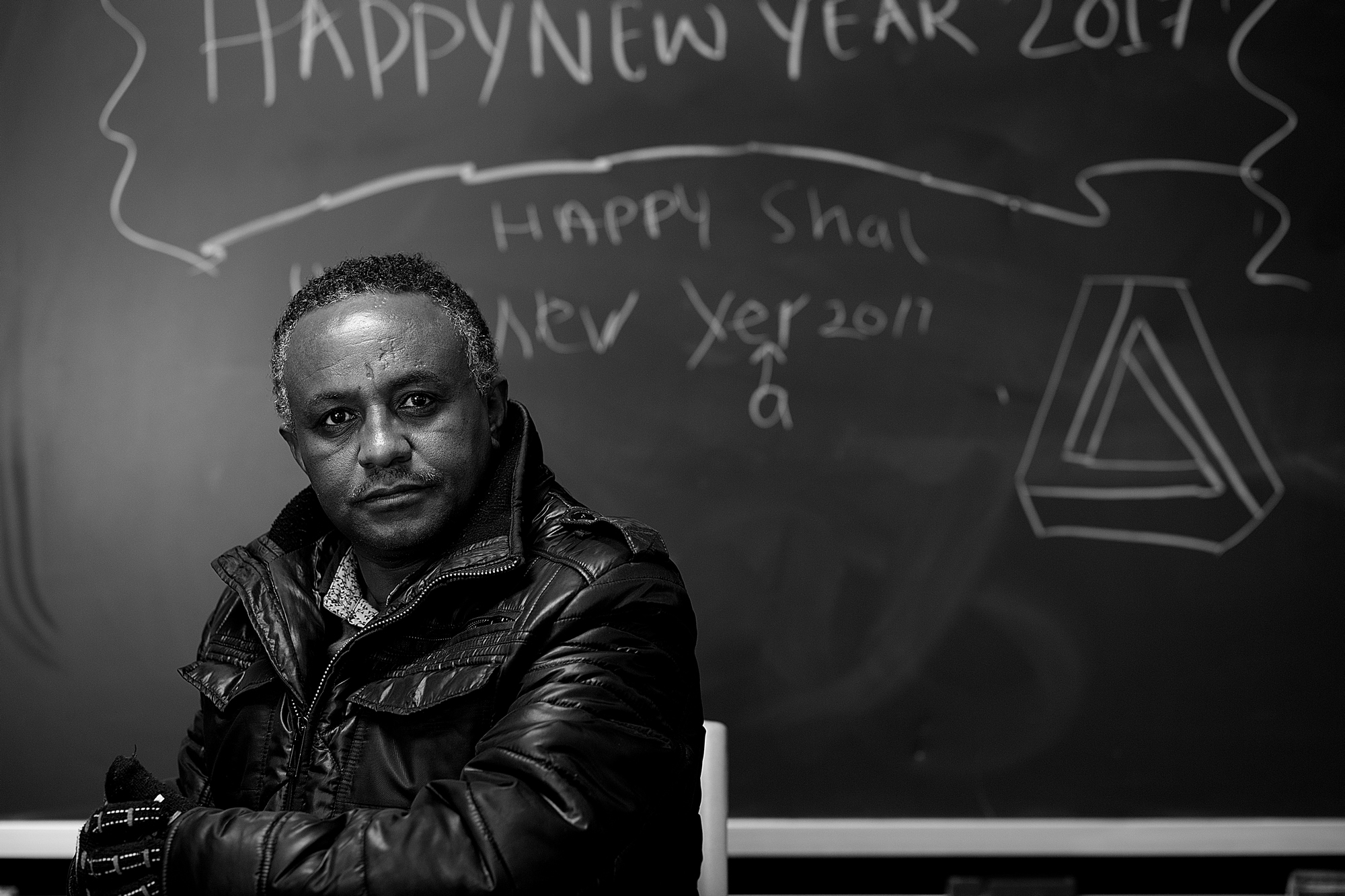
Debebe Orku, 50, was a seasoned photographer who captured a journalistic moment that would change his life forever. In the midst of a government protest, police shoved a BBC journalist to the ground. Orku sold his photo to the BBC, where it made national news. The government called Orku to court, forbidding him from selling any more photos to censor the war from the Ethiopian public.
Orku’s image captured the attention of the state media channel. In his interview he stated, "The government has promised democracy but they were not giving it to their citizens. They are a regime."
The government wanted to silence any journalistic talk of what was really happening in Ethiopia. Photographers were disappearing or fleeing. The ruling party targeted Orku, so he fled for his life to Ethiopia's neighboring country, Kenya. Orku arrived as a refugee applying for a resettlement location through the Kakuma refugee camp. At least 21 other journalists were seeking asylum in Kenya.
Orku had to work to support himself. He wasn't a Kenyan citizen so he had to take jobs for reduced pay. "Due to not having paperwork, I had to work harder for much less compared to my Kenyan counterparts."
With the growing number of refugees worldwide, resettlement locations can take years to find. Under the United Nation law, resettlement should occur six months after a person is recognized as a refugee. In Debebe Orku’s case, it took 13 years.