An Interview With Writer Rachel Swearingen
On process, re-reading, and leaning in to your gifts
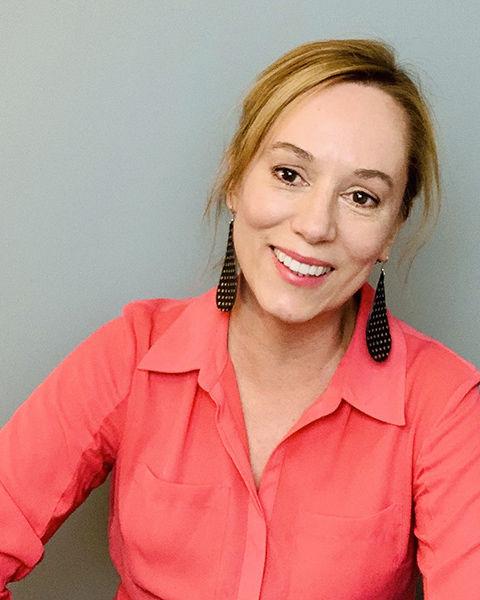
In anticipation of her upcoming reading at Penn State Behrend, I met with fiction writer Rachel Swearingen via Zoom to discuss her writing. Swearingen's reading will take place on Thursday, April 6th, at 6 p.m. in the Metzgar Center. It is free and open to the public.
Theodore Wolf (TW): Why do you write? What started you on your writing journey, and why do you write fiction and short stories specifically?
Rachel Swearingen (RS): I'm at a point in my writing where I'm trying to get back to those original questions. I started writing very young, and I'm not sure how it's been for you, but for me, there were a lot of oral storytellers in my family. I loved listening to stories. When I took my first creative writing class, I realized I could write throughout my life, that I could do something I love that came naturally to me. That's where it started, with loving hearing stories as a kid and enjoying making things up.
Why short stories? I actually started out as a novelist, but I had these crazy, elaborate stories that got so out of control. I just didn't have the chops to finish them. Also, I didn't have enough lived experience yet. When I started taking writing classes, my instructors asked for short stories rather than novel chapters. I thought the form would be a great way to learn the craft, but I'm still learning because short stories are more challenging than they appear. Now I write novels, short stories, and screenplays. I think of myself simply as a storyteller. Some ideas work better as short stories, some as films, and others need the room and flexibility of novels.
TW: Why are you returning to these primal questions of writing now?
RS: I think it has to do with getting older and thinking about how much time I have left to finish projects. It helps to be asked these kinds of questions. It's a gift to talk to someone like you who asks me why I write. I think many of us go through a phase where we write to please other people or to please an audience, and we lose track of what inspired us in the first place. Now that I'm older, I'm looking back and asking myself how it is that I still, after all these years, love writing a story?
TW: What do you tend to write about? Are there any overarching patterns or themes that you've noticed?
RS: Yes. I've seemed to always be drawn to characters on the periphery and weird situations. In the early days, I would push against this tendency because my stories weren't received very well. I didn't quite know how to tell the stories I wanted to then, and also stories about women didn't get published as much. Then, later, I tried to be more like the writers I read and less like the person I was – someone who came out of a small rural town with the kind of characters that you rarely find in The New Yorker. Also, I've always loved atmospheric stories, and genre tends to inform my work. I love mysteries, things that are a little spooky, and things that are strange and off-kilter.
TW: I've read two stories of yours, Boys on a Veranda and How to Walk on Water. What struck me about both of those stories are the characters at the center of them. In Boys on a Veranda, you've got this psychiatrist and he's grappling with his past, and in How to Walk on Water, Nolan and his feelings of inadequacy. Plot unfolds, but it primarily serves the characters. How did those kinds of characters come to be?
RS: Both of the stories you mention came about as reactions to things that I had read or seen. Boys on a Veranda was inspired by a single line in a Mary Ruefle poem—"I had the sudden urge to eat postcards of famous paintings." A friend of mine challenged me to write a story based on the line. I ended up writing three. The first was about a woman who's secretly eating bits of these postcards. Boys on a Veranda is about a psychiatrist looking out his window at this woman. They share this little ritual of loneliness together, the two of them eating separately but together.
The other story you mention, How to Walk on Water, came about when I was teaching a creative writing class at Western Michigan University. At the time there were a lot of TV series and movies about serial killers. Dexter was really big back then. Many of my students were turning in stories about serial killers, but they tended to glorify and be filled with gore. I tried to make a rule – which you should never do in a creative writing class because writers hate rules – that if they were going to write a serial killer story, they had to try it from a new angle.
And they pushed back and said, 'Why don't you try that?' So, I tried to write a short story from the point of view of a woman who survives an attack, but it was too close and too heavy. I kept asking myself "what if" questions. What if this was about the child of the woman who survived? And not just a child, what if it was a young man who has come back home to live with his elderly mother? The story suddenly became more interesting. There was more distance. The attack didn't happen directly to Nolan, but it spoke to a larger question I had for myself, which is: how do you deal with the trauma of your parents or your grandparents that trickles down to you? It became a more universal question for me.
TW: How have you evolved over the years as a writer?
RS: I think if you asked any older writer about their process, they would tell you that it changes over time. One of the things that's changed for me is that I am learning how to combine all that I've learned so far with a return to a more intuitive trust in my imagination. When I was younger, it was all imagination and intuition, and not enough craft. Later I focused so hard on craft that my stories were a bit wooden. Now I'm trying to bring these two things together, and I'm having a lot more fun.
TW: Do you think your imagination and craft needed to be separate for a time in order for you to really appreciate them together?
RS: Good question. When you've practiced a craft long enough that you don't have to think about it as much as you're drafting, you can give your imagination more space. There is a phase, at least there was for me, where I had to separate things enough to actually understand what I was doing.
TW: What literary or non-literary influences contributed to your development as a writer?
RS: So many different influences. I had a non-traditional route into writing. I took a couple early creative writing classes, and then I was on my own for quite a while. I was reading different writers and, in some cases, copying their stories by hand to get the feel of their prose, to take their stories apart and study them. I studied playwrights to see how they were plotting. Plot was something that took me a long time to learn. Theater, film, and visual art had a huge influence on me, too, and the way artists make artwork, their processes. Science comes into my writing as well, often as a way to inform structures. I borrow from everywhere.
TW: That's a really interesting notion you bring up about science informing your work on a structural level. Could you explain that a bit more?
RS: A lot of writers draw on scientific theories and ideas for shapes and narrative patterns. The Möbius strip, various chemical processes, chaos theory, and entropy come to mind. One of the stories in my collection came about by hearing a story about entomologists working with acoustic engineers. I tried to shape the story around the process of diapause. Neuroscience, chemistry, astronomy have helped us to reconsider how we experience time, and it's no wonder films and books are not as linear today. We see things differently now, thanks in large part to science.
TW: As a professor, you see lots of novice writers, and you read a lot of their work. If a novice reader were reading this, what advice would you give them?
RS: I would say figure out what your gifts are and lean into them. When you get negative feedback, ask yourself if some of what you're hearing might actually be your gift. Then figure out the things you're struggling with, what you need to learn in order to make the most of your gifts, and find the shortest route possible to do this. Let's say someone told you that your writing is too flowery, too extravagant, that you need to pare it back. Well, another way to look at this is that you're writing by voice and by sound, and that you have an ear for rich language. You might need to learn how to better plot your stories in order to put your language to the best use. Also, no story is made for everyone. Find readers that can help you become more you on the page.
TW: What do you wish you knew when you started writing?
RS: I wish I'd known that there are ways to shorten the study period. You can find shortcuts to learning basic craft. That wasn't apparent to me when I started. I also wish I could have seen and believed in my strengths and embraced them more rather than trying to tamp them down in order to please.
TW: What are some of these shortcuts to learning craft?
RS: One shortcut is to find the authors that really speak to you and reread their works, take them apart to figure out how they're put together. That kind of study is invaluable and a lot of writers don't do it. The other one is finding a good instructor, a mentor who can show you the things you can't see in your own work. We have blind spots as writers. Often, we can't see what our strengths are, or pinpoint the one craft lesson that could take our work to the next level. As an example, I had a great instructor in graduate school who gave me one tiny piece of advice. He said, "Rachel, in order to write the stories you want to write, you've got to learn more ways to transition." I was playing with time and structure in a way that required new modes of transitioning. When he pointed that out, I had something I could focus on and study, and it paid huge dividends for me.
TW: Do you have a favorite story of yours that you've written? Why is it your favorite?
RS: My favorite piece is usually the one that I just finished, and I just finished a very short story called Clown School that takes place on the L in Chicago and features a middle-aged woman on her way to clown school. All kinds of crazy things happen in it, and it was a lot of fun to write.
Theodore Wolfe is a senior in the BFA in Creative Writing Program at Penn State Behrend.