Switched On: Bob Moog via Dr. Albert Glinsky
An electrifying look into the man behind the synthesizer
If you've been following popular music at any point since the late 1960s, then you have probably heard the Moog synthesizer in use — The Beatles, ABBA, Michael Jackson, Nine Inch Nails, and Daft Punk are just a handful of the popular artists to employ the revolutionary instrument in their songs.
However, up until now, very little has been written about the man who invented it. The latest book from author and composer Albert Glinsky, Switched On: Bob Moog and the Synthesizer Revolution, gives readers an inside look at the man himself and a detailed timeline on how the synthesizer was created and embraced by the music community, and how its signature sounds reverberate into the present day.
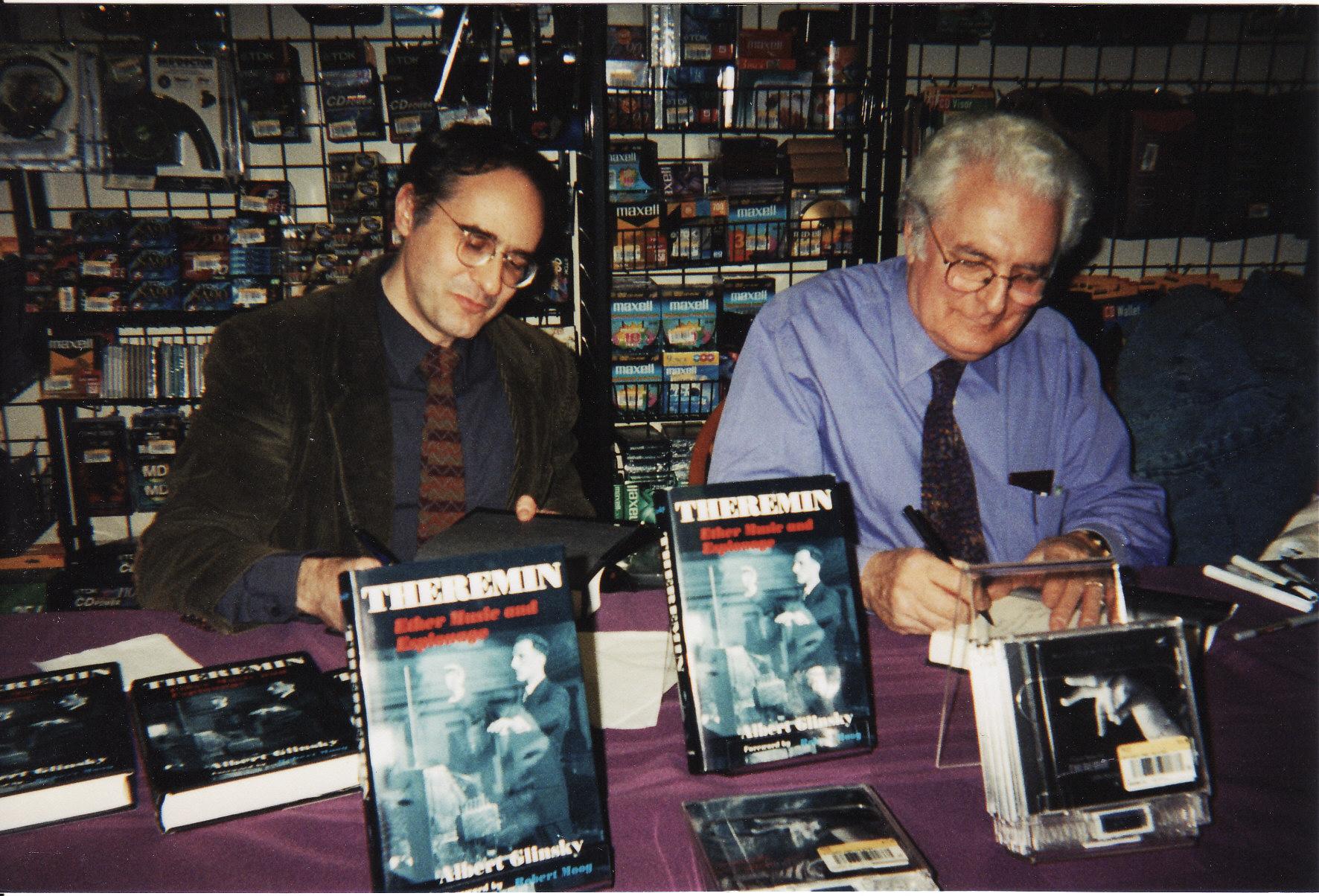
Albert Glinsky, Ph.D., a professor emeritus at Mercyhurst University, has a long history as a composer, his works having been performed at Lincoln Center, the Kennedy Center, and throughout Europe. Glinsky's love of music also inspired him to write the book Theremin: Ether Music and Espionage in 2000, which covers Russian/Soviet inventor Leon Theremin, who created one of the first electronic musical instruments, the theremin. The book featured a foreword by Bob Moog, which started a professional relationship between Moog and Glinsky and brought Moog to Erie in 2000 for an electronic music showcase at the Erie Art Museum.
Theremin: Ether Music and Espionage was well-received and is regarded as required reading for anyone studying electronic music, making Switched On: Bob Moog and the Synthesizer Revolution a natural follow-up. When Moog passed away in 2005, he left behind a treasure trove of letters, pictures, and financial receipts documenting the entire history of his life and career. A year after his passing, his children (three daughters and a son) started looking for a way to memorialize him, so they started the Bob Moog Foundation in August of 2006.
The foundation, located in Asheville, N.C., features educational resources, archives, and what is often called the Moog-seum. Glinsky said that he got a call from one of Bob's daughters, Michelle Moog-Koussa (who is the executive director for the foundation) about three years after the foundation was established. "She called me up and she said that they were hoping that there would be a biography of Bob Moog. A portrait of the man, since there has been so much written about his instruments and his work as an engineer, but no one ever did a real biography that really characterizes his life, personalities, and his troubles."
Moog-Koussa asked Glinsky if he would like to take on the project, and he took almost no time at all to confirm his interest. Nonetheless, it was a massive undertaking. "There were thousands and thousands of documents that we had to go through, photocopy, and scan." With help from his wife, they took a number of trips to Asheville, N.C. to collect information and, on one trip, they copied 8,000 sheets of paper to take back home to Erie to review. "The book took 12 years of my life to make, and 12 years of my wife's life to make."
When asked why he believed Moog's family approached him to write the biography, Glinsky said, "I think they felt that I had a distance because I wasn't his best friend. I would have a certain amount of objectivity and tell the whole story. The reason they thought of me was that Bob really liked the Theremin book and he would buy extra copies to give as presents to friends, and he would make notations in the margins of some of his favorite parts. So, they asked if I could do with Bob's life what I did with Theremin's, because Bob would have approved. Because there is such a throughline from there to Bob."
Even though there are similarities between Theremin and Moog, the two men were different people, who both came to prominence as godfathers of electronic instruments but with wildly different backgrounds. "One of the major differences is that there is a whole lot more information about Bob Moog out there than there was for Theremin, for many reasons," Glinsky stated. "The main reason was that Theremin was a Soviet citizen most of his life, and information on him was kept top secret. He was always scared to death to talk to Westerners because he was afraid of giving anything away, or saying anything he would be punished for when he went back to the Soviet Union. He was very mum and not a person who kept diaries. With Bob, not only did I know him, so many other people that knew him wrote about him. There were so many interviews and personal correspondences."
When asked what type of person Moog was and how that shaped his book, Glinsky reflects, "Moog is a little more of an earthy character, wonderfully real and he loved telling jokes, whereas Theremin was very much the opposite. So, when I wrote about them I tried to write in the style of their lives. Bob used four letter words and was a real American of the '60s." One of the most interesting things Glinsky found was Moog's early love letters with his then fiancée, who would become his first wife. These are reproduced in the book along with one of his illustrations, an early cartoon that he made for her, showing a more personal side rarely seen before.
Glinsky states, "The book is meant for a broad audience, to take in the general reader who likes a good biography: musicians, the electronic people, the geeks, the people who can take apart a synthesizer screw by screw and put it back together and know every circuit. Although it's not a highly technical book, it covers most of the instruments that Moog fans would want it to, as well as business and business ethics, because he struggled with that a lot."
Switched On: Bob Moog and the Synthesizer Revolution by Albert Glinsky, with a forward by Francis Ford Coppola, was recently released by Oxford University Press and is available in hardcover and as an ebook.
Larry Wheaton tends to stick to the brass and percussion instrument families, but has been known to tinker with a theremin from time to time. He can be reached at wheaton1138@gmail.com.