A Burning Issue
Where poverty and fire overlap in Erie
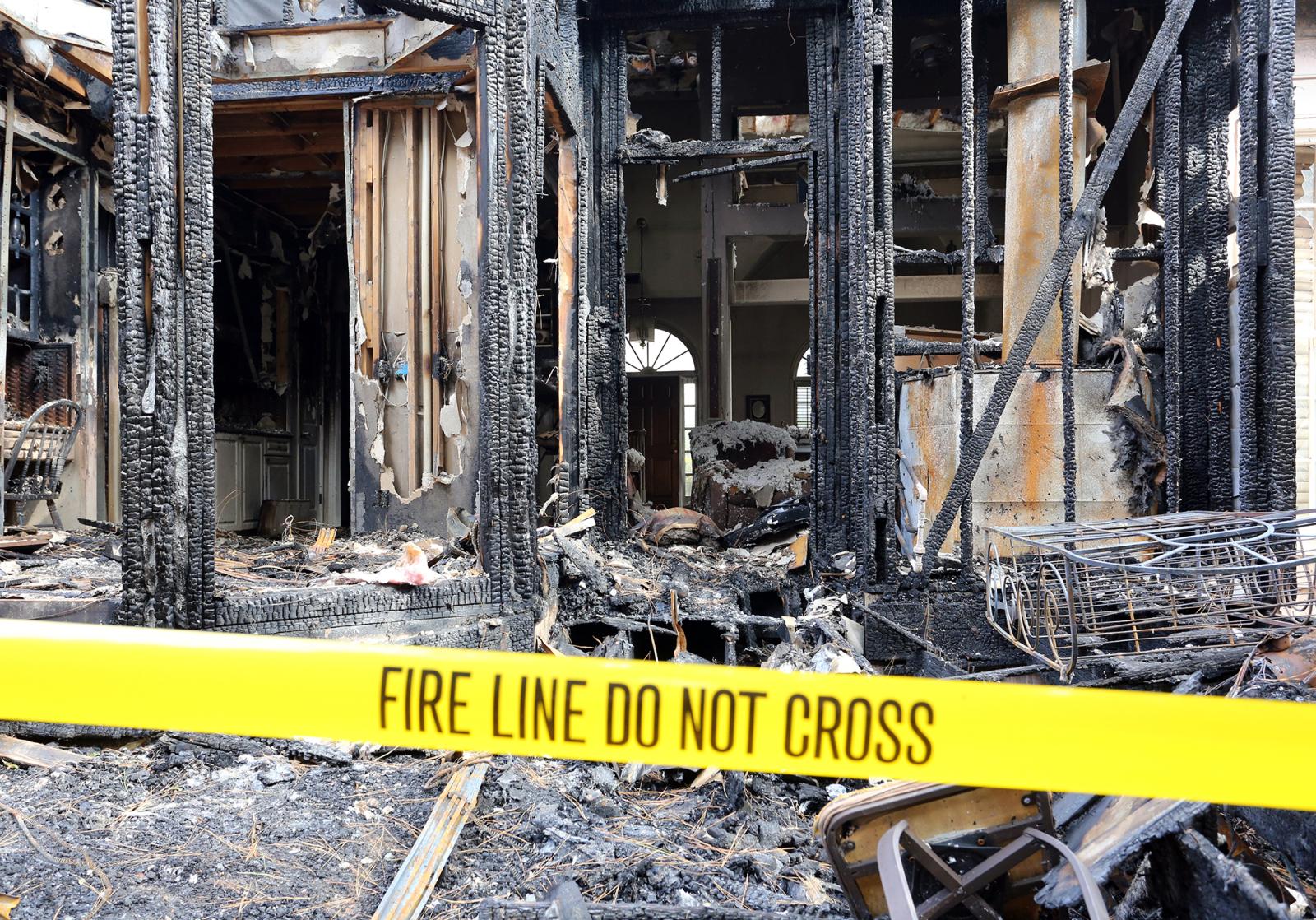
Flames burst through a second-story window and licked up the sides of a house on East 26th Street as first responders entered and attempted to save the three children inside – a 5-month-old baby, a 2-year-old girl, and a 5-year-old boy. Although officers performed CPR and the children were transported for medical care, they did not survive.
This comes as the Erie-Times News reported 12 fatalities in 10 fires across Erie County since Jan. 2025, reigniting a conversation about fire safety. They aren't the only ones looking into it, though, as two Gannon seniors, who also serve as volunteer firefighters, made it their mission to take a deeper look into the fire incidents in the city of Erie.
Students Alexander Purchase, whose father is the city's assistant fire chief, and Rebekah Young gathered data on working structure fires – active fires that require fire department extinguishment – from 2021 to 2025, which is just over 400 house fires or about one every 4.5 days. The students used geographic information system (GIS) mapping to determine fire hot spots, then they mapped out the Erie's census poverty rates, focusing on the overlapping areas.
Fires are fairly evenly distributed across the city, but where poverty is highest, especially on the east side and in central neighborhoods near the Bayfront Connector, the two variables seem to reinforce each other.
In a unique circumstance, Purchase and Young not only had data to inform their project but on-the-ground experience. Houses in poorer areas, Young said, are more likely to be run-down structures, and their occupants may turn to desperate but unsafe measures, especially in the winter.
"We all know how horrible the winters are in the area, especially with how cold it got this winter," she said. "People resort to things such as leaving their stove turned on, putting their oven on at 400 degrees and opening the door, using space heaters that are just a huge fire risk – especially if they're not plugged into an outlet which can provide enough wattage to safely operate it."
Chief Fire Marshal Donald Sauer said that from 2023 through 2025, there were 134 accidental fires, of which careless smoking and electrical causes ranked the highest. Using electrical devices according to the manufacturer's guidelines and properly disposing of smoking materials would "greatly lower accidental fires," he said.
With the age of Erie's housing stock averaging about 70 years, buildings are not necessarily as fire-safe as houses today. And although a smoke detector can activate less than 20 seconds after a fire starts, it may only take five minutes for a fire to spread up the beams of an older house and engulf the structure, making prevention a key resource.
Erie is not alone though – Pennsylvania has the most civilian home fire deaths out of any state, with 131 in 2025, according to the United States Fire Administration, followed by New York with 114 and Texas with 104.
On average, there are about 2,600 fire deaths and another 10,770 fire-related injuries per year in the U.S., according to the National Fire Protection Association, meaning that Pennsylvania accounts for about 5 percent of fire deaths even though Pennsylvania's population represents about 3 percent of the country.
Pa. State Fire Commissioner Thomas Cook said that the Community Risk Reduction effort is about getting ahead of emergencies before they happen.
"By identifying local risks and aligning efforts between municipal leaders, fire departments, and community partners, we can implement targeted strategies that prevent injuries, save lives, and protect property," Cook said.
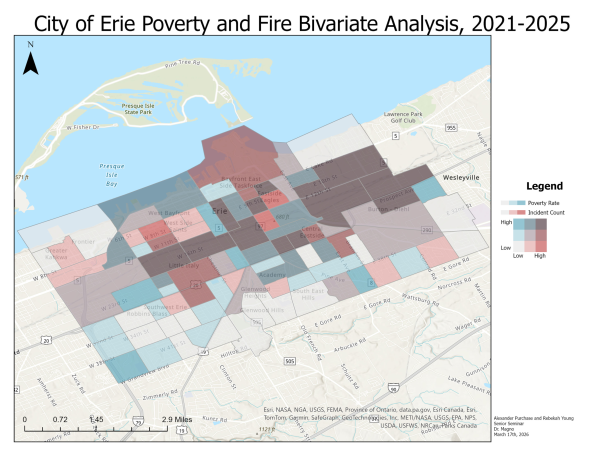
This map overlay shows the data-driven connection between fire danger zones (or hot spots) and City of Erie census poverty rates.
The Office of the State Fire Commissioner even offers a Community Risk Reduction Best Practices Guide, which it strongly encourages municipalities and fire services across the state to utilize.
In the city, Mayor Daria Devlin is already taking a hard look at improving fire safety in impoverished areas using a holistic approach. As the former director of social impact at Hamot Health Foundation, she is no stranger to the social drivers of health through housing and neighborhood revitalization.
The city has poverty rates above 50 percent in some areas, with an overall childhood poverty rate of about 35 percent.
"That level of concentrated poverty is directly tied to a range of public safety challenges, including increased fire risk in certain neighborhoods," Devlin said." We can't look at structural fires in isolation from the broader conditions people are living in."
She noted that in some of the situations, they are also seeing families and single parents struggling to receive necessary resources like safe housing, basic home repairs, and mental health and support services. She believes that breaking down silos and better coordinating with partners could prevent fires, or at the very least significantly reduce their impact. That's something the city has prioritized during Devlin's first 100 days.
One of the first things she did was meet with each department, including fire and code enforcement, to better understand how they operate.
"What became clear is that fire prevention requires stronger cross-department communication," she said. "In many cases, fires are tied to underlying code violations or unsafe conditions in homes that create serious risks for both residents and the property maintenance inspectors and firefighters who respond."
That not only includes better coordination, but also overhauling the rental inspection program. Currently, landlords are required to register with the city, but a third-party vendor performs the inspections. By doing it in-house, there could be better awareness of what violations or issues exist within the city.
Devlin has also begun conversations with Dr. Natalyn Gibbs at Erie Public Schools and Captain Tom Lenox, who heads the Police Athletic League mentoring program for youth, to discuss ways to increase fire safety education with children and families.
The steps that the city is taking align with the recommendations of the Gannon students, who called for a code review in "high-risk" areas, which often include rentals, as well as demolition of problem structures that cannot be brought up to code. The city said that it sees eliminating some gaps in the rental registration process as a way to specifically address older homes.
Through prevention, response, and coordination, they're hoping to spark change.
"We believe these efforts will help reduce the risk of preventable fires," Devlin said, referencing the fire in which the three children died. "In the case of the most recent fire, we mourn the terrible loss of young life and are committed to doing whatever possible to prevent future tragedies."
Chloe Forbes is a local journalist. Reach her at chloeforbes14@gmail.com