Considering the City
Diminish Blight by Repopulating Erie
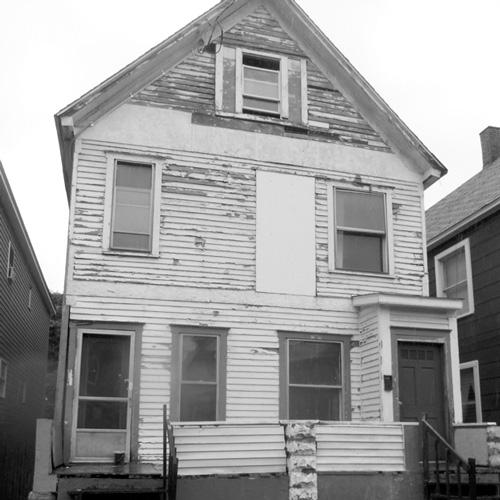
As most readers know, the planning firm CZB is working on a comprehensive plan for the city of Erie. One of the biggest concerns CZB has outlined is the issue of blighted properties and diminishing real estate values.
Though Erie was built to accommodate 140,000 people, today, fewer than 100,000 live in the city. But, thousands of people work in Erie. Every weekday morning, Erie's highways and arterial streets are clogged with suburbanites rushing to jobs in the city. This is partly due to the fact that the city of Erie has no residency requirement; many of the city's police, fire-fighters, school teachers, and office workers live in Millcreek, Summit, Harborcreek, and beyond. Concerns about safety, schools, and taxes drove many people out of the city. Sadly, it is a worsening spiral: as more residents leave, taxes go up, crime increases, schools suffer, and more residents leave.
To reverse this exodus, we could reconsider the residency requirement for city workers. But, rather than a mandate, perhaps we can find ways to attract new homeowners.
Employer-assisted housing programs
Employer-assisted housing programs provide loans, or gifts, to employees who choose to live in neighborhoods next to their place of work.
The University of Chicago offers employees a forgivable loan of up to $10,000 for home purchase in selected neighborhoods through their Employer-Assisted Housing Program (EAHP). The University of Chicago says that the EAHP "strengthens its connections to surrounding neighborhoods, retains valuable employees, and helps staff optimize their work-life balance." This program creates "a more stable workforce" with "improved morale, less turnover" that results in financial savings for the university. Employees also gain "extra time — formerly spent in traffic."
According to The Greater Minnesota Housing Fund handbook on employer-assisted housing programs, employers find that these programs stabilize neighborhoods surrounding their firm's property, reduce absenteeism, "tardiness, and stress as commuting times decrease," and increase productivity in the workplace.
Imagine if a percentage of the thousands who commute to Erie could be lured to downtown living. If employers including Gannon University, UPMC Hamot, Erie Insurance, the YMCA, the Soldiers' and Sailors' Home, and the Dr. Gertrude A. Barber National Institute would create employer-assisted housing programs, Erie could be transformed.
City–assisted homesteading
Erie could create a local group inspired by NYC's Urban Homesteading Assistance Board (UHAB) to empower residents to use "their sweat equity" to rehab a vacant, blighted or tax-foreclosed property. To gain control of these buildings, the city could increase code-enforcement fines on non-owner-occupied blighted properties; and then make them available — for low or no cost — to those with the interest, and commitment, to renovate — and live in — these buildings.
The strength of NYC's UHAB is based on principles including self-help and cost-effective sustainability. Erie community leaders could serve on a board to form and oversee a new urban homesteading project in our downtown.
Church leaders could nominate homesteading candidates, and parishioners could collectively assist in renovating blighted homes. Ethnically-focused private clubs could also locate and support new homeowners.
We should embrace the energy and drive of our refugee and immigrant communities. The Multicultural Community Resource Center, International Institute, and the Urban Erie Community Development Corporation could collectively work to help these New Americans to embrace Erie homeownership, updating Erie's long tradition of ethnic neighborhoods.
Labor unions, craftspeople, and artists could be involved in citywide preservation of historic properties. During the summers, students could apprentice with artisans working in their neighborhoods and learn skills in wood, masonry, tile, paint, plasterwork, electrical work, plumbing, and construction.
While the news from CZB is grim (too much housing and too few residents), a recent study by Wise Preservation Firm noted that Erie — especially the city — is very rich in diverse and significant residential properties.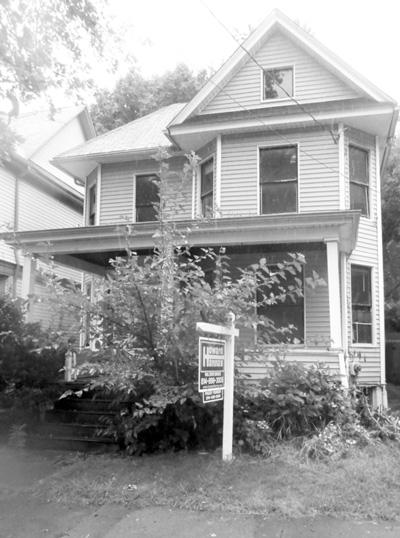
Before we agree to spend money on demolition, let's try working creatively (and aggressively) to attract new homeowners. In his 1998 book, The Wealth of Cites, John Norquist, former Mayor of Milwaukee, wrote that today, "people are seeking a sense of belonging, of community," and that "part of what they are looking for can be found in real neighborhoods, in real cities." Norquist noted, "the design of the old cities has been where the market has been going for the last 20 years."
Pittsburgh native Erin Wincek is a great example of "where the market is going." Wincek recently moved from a suburb in Erie County to a home in the West Bayfront. She says after hearing so much negative feedback about "crime, bad schools, a declining population and high property taxes" in the city that she "struggled" with her decision; but Wincek "wanted to invest in the city," and she did.
Wincek doesn't expect to "make a ton of money" reselling her home. She is making "a different kind of investment" by raising her children in a diverse place "with sidewalks." Wincek says, "my children walk home safely from school" and "my dog is showered with love from the neighborhood kids." She is able to "walk, bike or take a bus to work." Wincek is happy that she has "found a neighborhood of all types of people with all types of stories … kids out playing all the time, neighbors who know each other, and beautiful old homes."
Like many others living downtown, Wincek is investing in the city so that she can be "a part of the change."
Erie is a "real city" filled with "real neighborhoods" brimming with human potential — and with space for more.
Let's not tear Erie down. Let's build it up.
Civitas members can be reached at their website www.civitaserie.com, via Facebook at CivitasErie, by emailing Lisa@civitaserie.com, or by scheduling a Friday morning meeting at the Civitas office in the Masonic Building, 32 W. Eighth St., Erie, Pa.