Dueling Dual Epidemics
COVID-19 and opioid abuse in Erie County
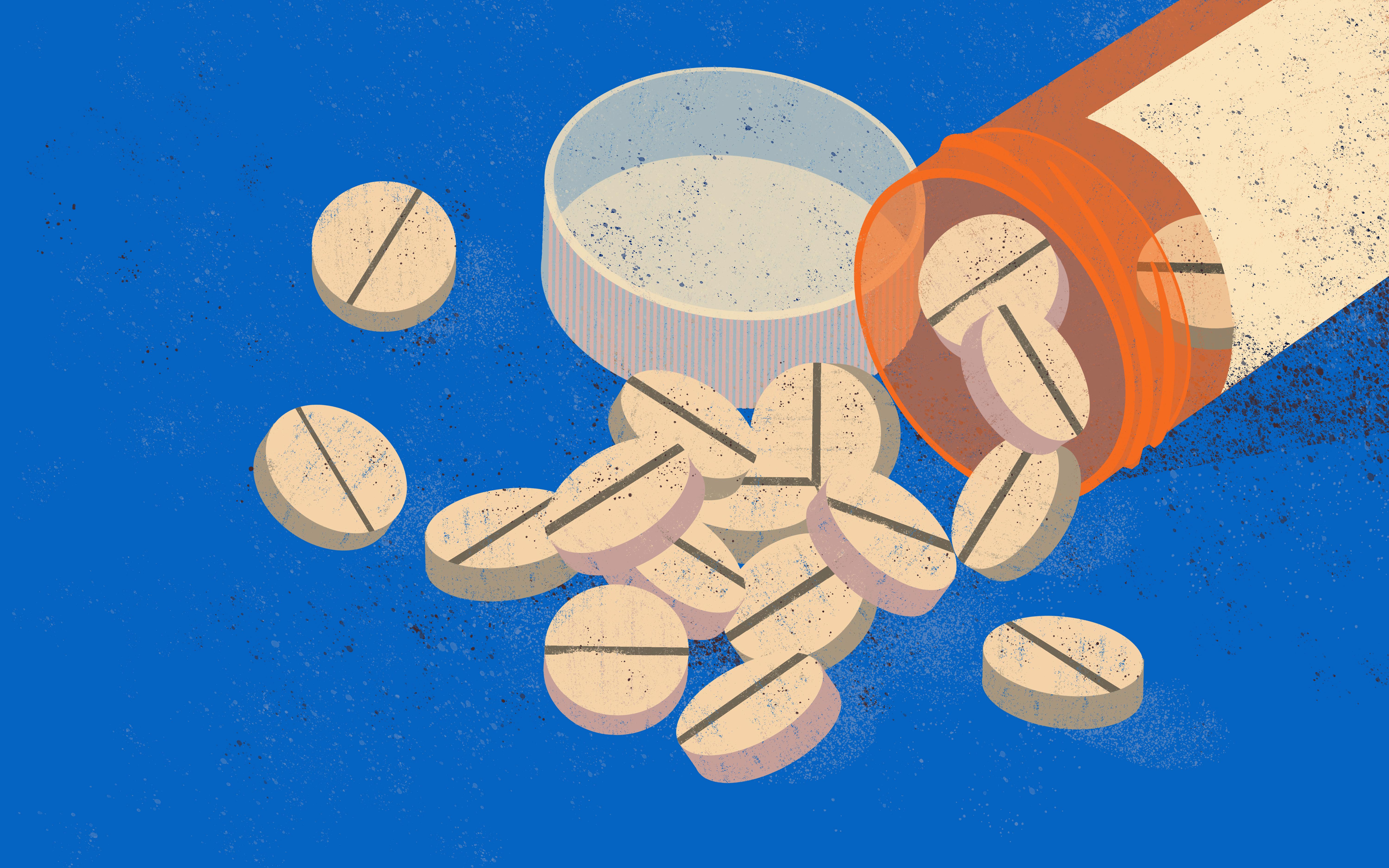
Since the spring of 2020, the COVID-19 epidemic has directly impacted our lives on a daily basis, sometimes as an inconvenience and sometimes as a life-changing catastrophe. It's been absolutely exhausting — and it's not over yet.
But COVID isn't the only crisis we're dealing with. According to Jason Kisielewski, community affairs manager at Gaudenzia Erie, Inc., people living with addictions "have been facing two pandemics: the coronavirus pandemic as well as the heroin and opioid epidemic." Over the past year-and-a-half, COVID-19 has taken the lives of nearly 700,000 people in the U.S. alone — including more than 500 of our neighbors in Erie County, according to the Erie County Department of Health. Alongside its wrath, overdose deaths also rose steadily. The Centers for Disease Control and Prevention (CDC) estimate that over 81,000 drug overdose deaths occurred in the U.S. between May 2019 and May 2020 — the highest number ever recorded. By the end of the year, that number exceeded 93,000 people.
In Pennsylvania, the CDC has reported a 16 percent increase in overdose deaths between 2019 and 2020, ending over 5,000 lives. In Erie County, drug overdoses led to 89 casualties in 2020. As I write this in late September, our coroner's office has recorded 66 overdose deaths in 2021. And our Commonwealth's website estimates that there are 4,677 people in Erie County living with a drug use disorder.
Concurrently, COVID-19 has left many of us more anxious and isolated, which often leads to destructive behavior. "People who are battling anxiety, stress, and depression often turn to drugs and alcohol to cope with things," according to Kisielewski. "Addiction is an isolating disease, and COVID-19 has limited our clients' abilities to engage in social interactions with the recovering community."
This article is an attempt to tell two familiar, depressing stories at once. We'll consider what people with addictions are going through during an unprecedented epidemic. And through conversations with local recovery specialists and public health officials, we'll examine what it's like to provide addiction resources at a time when our hospitals are overextended and many are understandably reluctant to leave their homes.
What has changed
"In 2018, Governor Wolf declared a state of emergency for the opioid epidemic. And we were really encouraged by the initiatives that were set forth from that declaration," says Kisielewski. These initiatives have included training and outreach events targeting roughly 13,000 student and faculty members at our colleges, eight Medication Assisted Treatment programs across the state (as well as an expansion of such programs in our prisons), new initiatives targeting the needs of veterans with addictions, and a sustained effort to make naloxone widely available to first responders and community organizations.
For the unfamiliar, naloxone (often referred to by the brand name Narcan) is a medicine designed to reverse symptoms after an overdose has occurred. According to Mary Rose Kerner, epidemiology investigator at the Erie County Department of Health, "the benefits of naloxone include the complete reversal of an overdose which saves a life and enables us to transfer a person with a substance use disorder to a hospital where they can be introduced to warm handoff programs and treatment." Though Kerner believes naloxone should be "included in every first aid station just like a defibrillator," she is quick to resist thinking of it as a silver bullet: "One of the greatest dangers is considering naloxone the only intervention needed to end addiction and substance use. Without a continuation of care, there is no long-term solution for those who are suffering from substance use disorders."
We've had some small victories in our efforts to address the heroin and opioid crisis over the past few years. Opioid prescriptions have been reduced by approximately 40 percent in the state of Pennsylvania, for example. And the warm handoff programs mentioned above, which pair people in overdose situations at emergency room facilities with immediate treatment and recovery services, were able to continue throughout the pandemic while medical professionals effectively maintained safety protocols.
But challenges related to COVID-19 — and synthetic opioids like fentanyl — have made real progress difficult. Kerner laments that fentanyl is not only showing up in our heroin supplies, but also in counterfeit pills as well. "With COVID-19," she says, "not only is there the risk of contaminated sources, but also the threat of a deadly disease and mitigation efforts associated with it." For example, people are less likely to use drugs in groups while social distancing. "As a consequence," she continues, "if there are high amounts of fentanyl in what is used, an overdose might occur while the user is completely alone. This eliminates the chance of immediate intervention with naloxone or for the presence of emergency medical services."
Addressing needs effectively
According to Mandy Fauble, director of clinical care services at UPMC Western Behavioral Health at Safe Harbor, "there are three key ways that we have seen individuals we serve impacted by the pandemic. The first has simply been an increase in stress. While we have all been impacted, for people who are already managing stressful situations or dealing with existing health concerns, the pandemic has generally taken a tougher toll. For individuals managing caregiving, parenting, health issues, moves, financial burdens or other types of needs like substance use disorder, they might be spread very thin in terms of the volume of things that demand their attention and that also require the use of their coping skills."
Fauble continues: "The second challenge has been increased isolation. It has been difficult for many of us to be away from our friends, relatives, routines, and things that can give us a sense of purpose and keep us going throughout our day. For individuals seeking recovery, disconnection from 12-step meetings or healthcare services can also increase the risk of recurrence of use or postponing care."
Fauble's third challenge involves resources: "While many services have shifted to telehealth during the pandemic, or remained open, getting services and access to resources required efforts to adapt. The pandemic has certainly highlighted how successful virtual connections can be, but individuals often needed to learn new technology, figure out new transportation options, or develop ways to ensure their telehealth felt as useful to them as their in-person services." At Gaudenzia, Kisielewski has also implemented a telehealth model, though it occasionally requires adaptation: "We have clients who are not comfortable utilizing telehealth opportunities. Maybe they don't have access to a laptop, a desktop, a tablet, or a smartphone. So we've done things like having counseling sessions over the phone to address it."
Vicki Church, a certified recovery specialist at Safe Harbor, has noticed "an urgent increase in the needs for social engagement" among her clients. She claims that practical concerns like "childcare and lack of transportation" have led to increased isolation. Fear of contamination on public transit, especially prior to vaccines becoming available, created challenges. She is also concerned about decreased awareness around addiction issues, noting that "the heroin/opioid crisis seems to have been put on the 'back burner.' It does not seem as important, or as much of a crisis, as it should. And it does not help when our overdose rate continues to go up dramatically." Church believes that we need "more media coverage, news reports, or even statistical analyses to show the community the importance of this." She also cites the need for more education in our hospitals, especially concerning "stigma, empathy, and stories of hope surrounding substance use."
COVID-19 also increases the competition for financial resources. At Gaudenzia, Kisielewski notes that "there is strong competition for dollars. Organizations that have been so great and supportive in the past don't have the ability to support us because they were also faced with their own unexpected situations." At Safe Harbor, Fauble is quick to note that her organization has weathered the storm, but "that the recovery from COVID-19 may be more challenging over the next few years."
We're living at an uncertain moment, with a seemingly endless series of catastrophes competing for our attention. It can be easy to ignore the opioid crisis when focused on an immunocompromised parent, a child with a suspicious cough, or a small business trying to remain solvent. But the problem isn't disappearing, and addressing it will require empathy, patience, resilience, and understanding.
Dan Schank can be reached at danschank@gmail.com.