Edwin Garnet Riley: The Humble Preacher, Poet, and Painter of Northwestern Pennsylvania
An Oil Region legacy that lives on
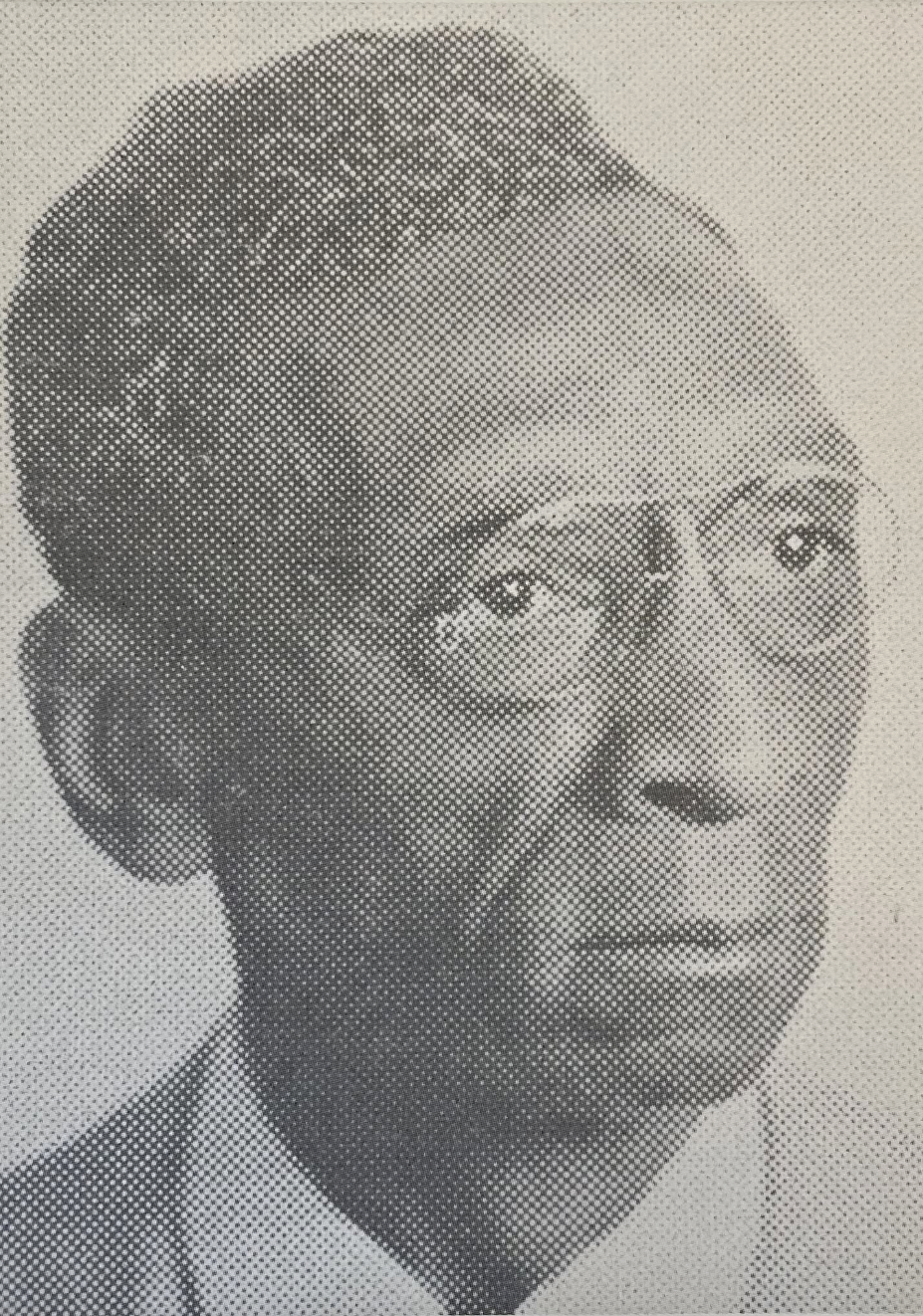
Edwin Garnet Riley was a preacher, poet, painter, essayist, historian, husband, and father in Titusville, Pennsylvania. In 1948, the Oil City Blizzard called him the "Titusville poet and narrator of facts and tales of legendary lore." The Pittsburgh Post-Gazette called him a "poet-historian." In 1958, the Titusville Herald noted newcomers to the city were always asking "Why, is this Mr. Riley?" In response, they gave Riley, now 78 years old and containing "a vast wealth of lore" about the Oil Region, a chance to introduce himself in an autobiographical sketch.
"I have lived a long and somewhat eventful life and my experiences have been many and varied and sometimes critical," wrote Riley. "I have seen men come and go. I have seen men rise to affluence and office and then be reduced to abject poverty over night," he continued. "I have always been interested in community life and its activities and have always seemed to gravitate toward the public."
Indeed, the Titusville community was central to Riley's life. He was born there on Sept. 5, 1880 to Ephraim and Anna (Burch) Riley. Ephraim was born in Macon, Georgia in 1856 while Anna was born in New Haven, Connecticut in 1858. Accounts vary, but most include that Ephraim escaped antebellum-era enslavement as he made his way to Cleveland, Ohio and then to Oil City where he worked as a bricklayer. Some of Anna's family arrived in the region during the Oil Boom. Before she moved to Pennsylvania, she had a daughter, Emma Gertrude. After her arrival, she then met Ephraim and they were soon married. Together, they had three children: William, Frances, and Edwin. The children attended Titusville High School. Upon graduation, Edwin then attended Howard University in Washington, D.C. before returning to Titusville.
On Aug. 2, 1906, Riley married Sarah Newsome, daughter of Darius and Mary (Lamb) Newsome, of Pittsburgh. Their oldest, Gerrit, was born the following year. They had six more children: Felicia (b. 1909), Constantia (b. 1911), Portia (b. 1913), Phyllis (b. 1916), Edmonda (b. 1918), and Merlyn (b. 1923).
The family resided at 126 S. Brown St., on the corner of Spring and Brown, in a homestead they called Sunnynook. Edwin served as an assistant pastor at the Titusville Trinity African Methodist Episcopal (AME) Church. He also traveled on behalf of John Jefferson Smallwood's Temperance Industrial and Collegiate Institute to raise funds for the schooling of Black youth. During these travels, he met and spent time with Susan B. Anthony and other popular civil rights and suffrage activists.
He'd also been writing from a young age. It wasn't long into adulthood before he was well-known for his poetry. In fact, the Titusville Herald made it in an unofficial policy that his would be the only poems published in their newspaper as "they were always of such high quality." His poetry often focused on Titusville history, places around the city, and the people who inhabited it. He often memorialized lives of recently deceased with a poem published in the Herald as well as a yearly Christmas poem.
In 1936, after having some of his work published in two different anthologies, he was complimented for the "excellence of his work" as a poet. Some of his poems were even recited over New York City radio by the Rockefeller Foundation. As historian Jessica Hilburn, author of Hidden History of Northwestern Pennsylvania, described it in her story on Riley: "Edwin Garnet Riley quickly earned a reputation for his detailed memory, excellent writing, straightforward style, and earnest craft."
The following year, he released "Sparks from the Anvil," a 32-page pamphlet of 44 different poems. "There is food for thought in each," the Titusville Herald stated. Copies made their way around the country, including to a critic at the Indianapolis Recorder who described Riley as "religious, anti-war, and an interpreter of homely philosophy" and "a bard who gives his reactions to life in rhymed cadences" who would "appeal to those souls who find inspiration in the verses of [Detroit poet] Edgar Guest."
Along with his poetry, he also wrote more straightforward narrative histories and biographies. He wrote often about the Oil Boom era including nearby boomtowns like Pithole and historical figures like Edwin L. Drake. In the Titusville Herald, he published some of these histories. As he knew many of the historical figures personally in his younger years, for instance, he contributed a multi-page story about many of the old houses across Titusville, which included Ida Tarbell's childhood home and the Burgess House, mansion of the region's first oil millionaire Jonathan Watson (then owned and renovated by Charles Burgess).
In his poem "The Conquest of Oil" honoring Drake, he praised his innovations and called for "a mighty chorus" to "magnify the fame of Drake." In a poem about Pithole, titled "Harlots on Parade," he highlighted the debauchery through the eyes of "men of vice" rushing from the saloons to watch a parade of scantily clad women coming down the street, adding that "many a man of wealth … came to the brothels at night by stealth."
In his narrative A Tribute to John Brown, dedicated to the famed abolitionist who lived in Crawford County for a decade, Riley called Brown the "greatest benefactor" of Black Americans. "Men have called him a fanatic and perhaps he was," Riley said. "Any individual who scorns the hypocrisy of his age and follows in the path of truth – who rears his temple in the unclouded clime of the ideal, is usually thought to be a fanatic. Yet, the fruits of any civilization and the progress of mankind, are but the result of fanatical intent."
In 1940, his sister Frances, now residing in Pittsburgh, died. Like her brother, she had gained significant renown and her death received plenty of attention. After attending the University of Chicago and marrying Dr. George H. Bolling, she founded multiple schools as well as Pittsburgh's Young Women's Friendly Institute. She'd also been popular lecturer and toured the country on behalf of the National Federation of Negro Women. The Herald described her as "a woman of strong and forceful character, broad of mind and deeply possessed with humanitarian instincts" with friends "numbered among the hundreds in every part of the country." Funeral services were held in Titusville.
Meanwhile, that same year, Riley released another book of poetry. This included 85 poems and the Herald said it had "a dedicated charm" and would "be read with interest" by all. Two years later, he released another collection, Mid-Summer Reveries, which had poems "dealing with wit, sentiment and philosophy" in a way that was "pleasing in style, clear in thought and interesting." After another two years, he released a volume titled Titusville, Past and Present, Poems, Sketches, and Legends. In it, he wrote sketches and poems about many people from Titusville's past. The book was described as "attracting extraordinary attention" upon its publication with "unforgettable characters, past and present" and "enhancing the historic aspect of life and character in this community."
The Titusville Herald continued to be impressed with his work, writing, "Mr. Riley has lived in this community all of his life and is conversant with the growth, progress and development of much that has lent charm and color to this business and cultural life of the city." In another review, they noted that his poems "all indicate Mr. Riley's love of beauty, his metrical exactitude and expression of his philosophy."
As for Riley, he said he did not "claim any considerable knowledge concerning the production, refining and transportation of oil," but he did "have a positive and first-hand knowledge of men and things and events associated."
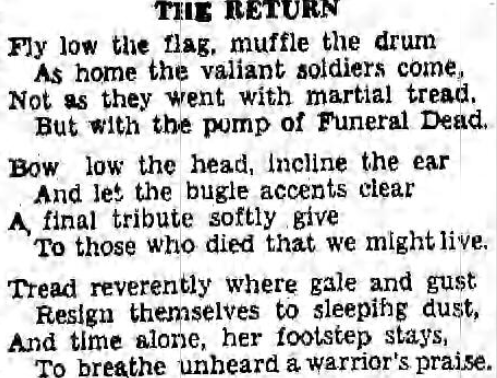
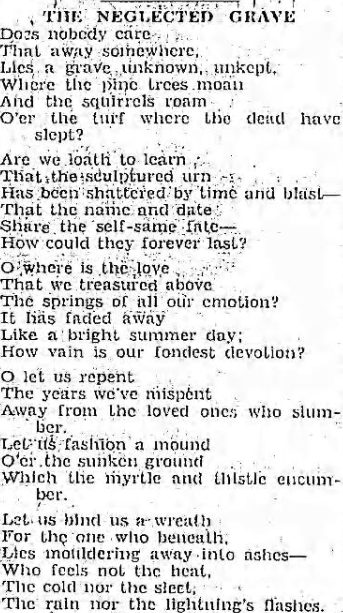
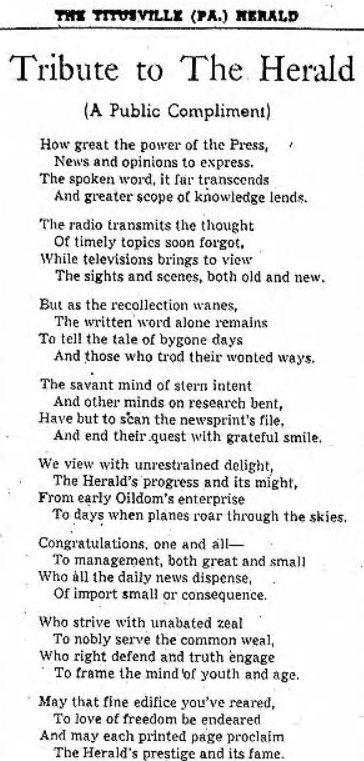
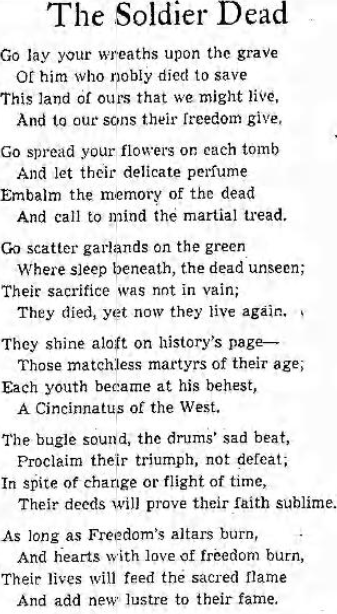
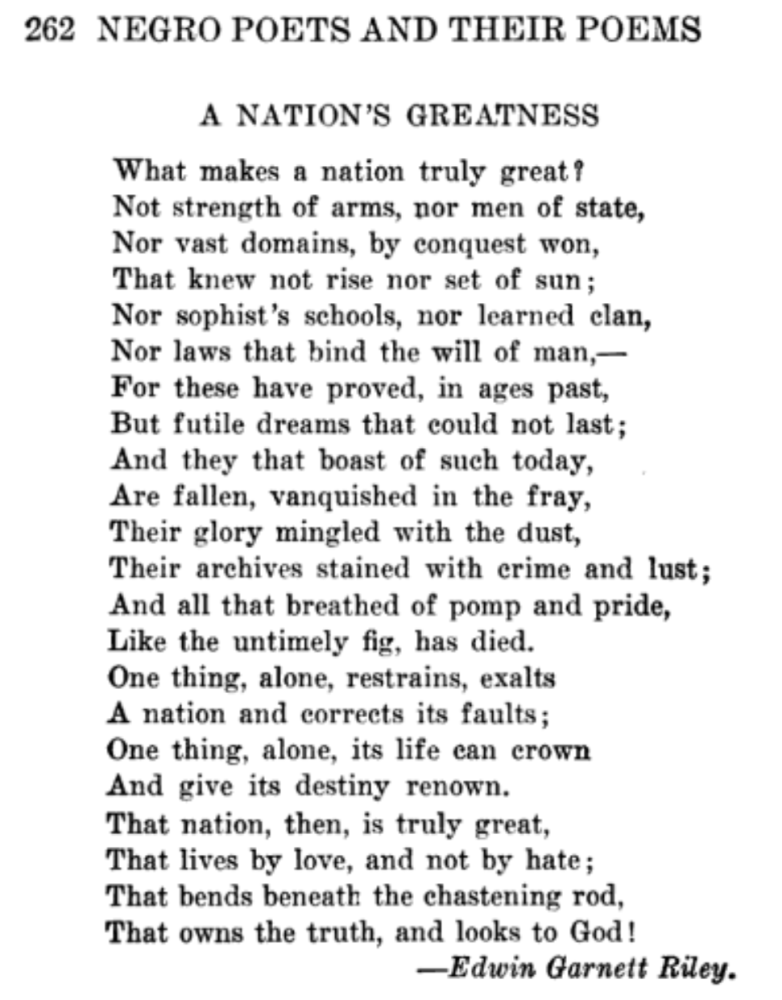
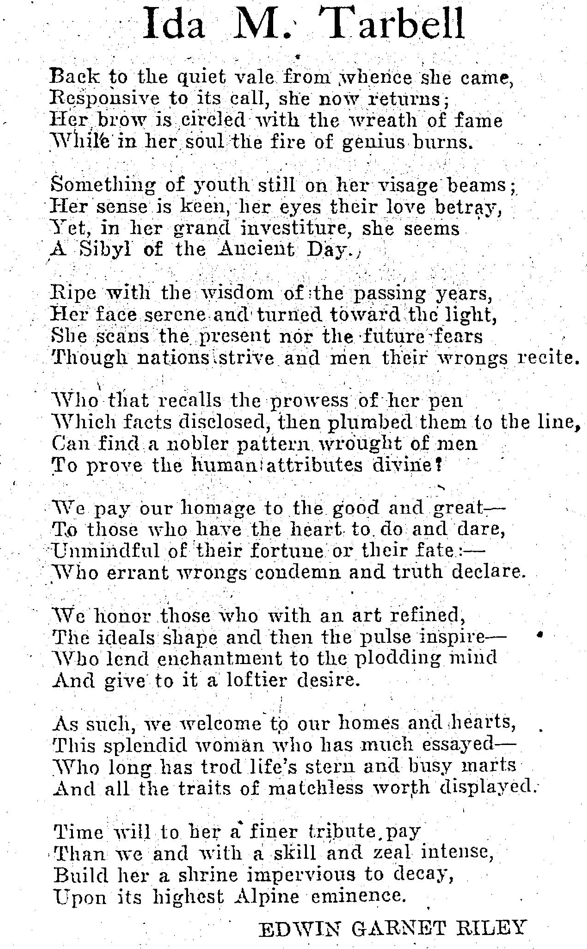
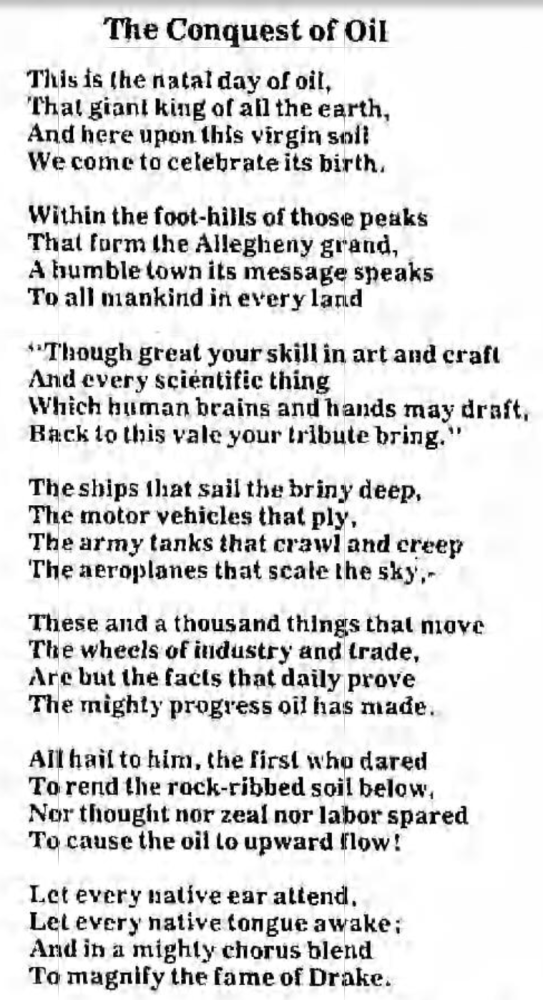
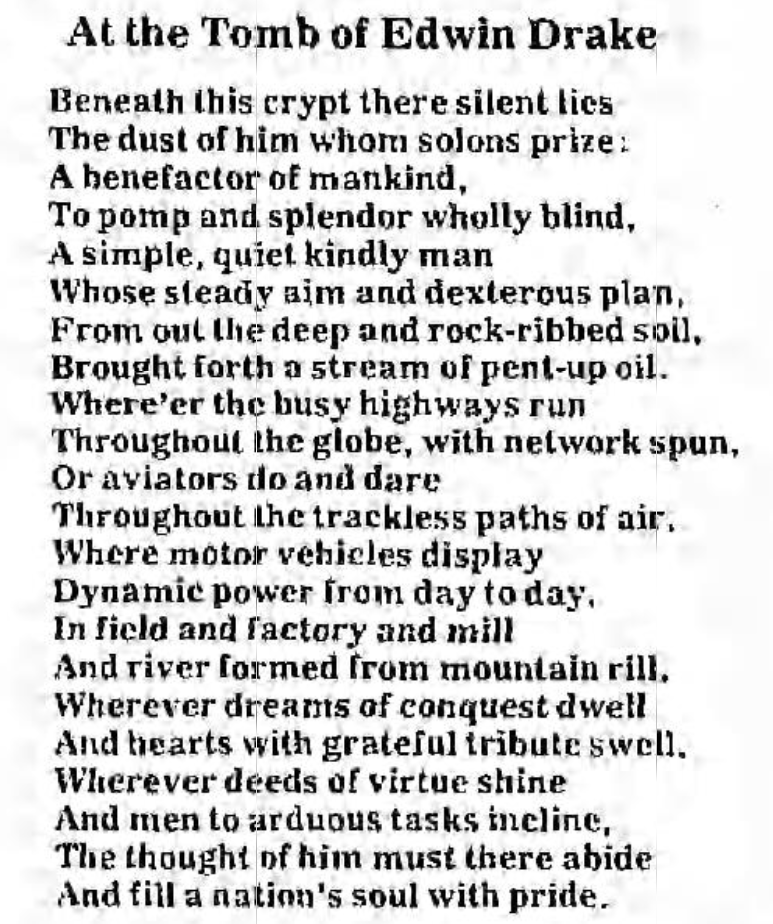
This photo gallery shows digital clippings of a number of Riley's poems, which largely appeared in the Titusville Herald
As his renown grew, he traveled and gave speeches. In Titusville, he was a usual figure present at events and ceremonies where he'd recite a relevant poem. In the newspaper, he continued publishing poetry, often as a creative "letter to the editor" commenting on contemporary events. For example, he wrote "Spare of Trees" when it came to his attention that historic trees in front of one of the Oil Boom era mansions were going to be needlessly cut down. "From boyhood we have fondly gazed on that enchanted spot," he penned. "How sad if when those trees are razed we look to find them not."
He also was painting more and more. He did portraits of his children and local historical figures and, by the 1950s, added landscapes to his repertoire. His finished works were often displayed at his church and the Benson Library and were described as "attract[ing] attention for originality, charm and as an example of creative energy." When his painting of Edwin L. Drake, titled "Father of the Oil Industry," was displayed, the Erie Daily Times noted their surprise at his newly revealed skill. "This is unusually interesting since the artist made no pretension of being an artist," they wrote.
Sometimes his writings were surprising. For instance, in 1953, following Joseph Stalin's death, Riley wrote a column about the lessons learned from his dictatorial rule and defended the United States political system. In context, this would have been written after important Supreme Court rulings desegregating public universities and in the midst of arguments on Brown v. Board of Education, in which the ruling the following year banned racial segregation in public schools.
"Democracy may sometimes fall short in its practices, but never in its ideals," Riley observed. "It has now and then been derelict in the performance of its duty, but it has soon awakened to consciousness. It has often stumbled in its path, but to its great credit, it has never stumbled backward, but forward." As for Stalin, he called him "vain" for what he saw as "personal ambitions and lust for power." He ruled to serve himself, not others.
"How much greater is it to serve than to be served?" asked Riley. "He that would be the master must indeed be the servant. And it is far better to rule by love than fear."
In a 1954 interview, he was complimented on the readability of his writing and the way in which he brought the subjects to life. "The Gourmet" was given as an example, following a poverty-stricken man searching through garbage for food after "muster[ing] up enough courage to put shame in his pocket and pride under his feet."
Entering his mid-70s, Riley spent much of his time at Sunnynook at his desk surrounded by his library. The Herald reported on his "comfortable living room and study" that was "lined with books, statuary and antiques." These antiques included his prized statue of Hebe, Greek goddess of youth and vitality, as well as 15 striking clocks, each ringing in unison each hour. He never gained wealth with his literary acclaim, but he and Sarah were content.
"I have always been a freelance writer and have never labored under any organization or auspices what(so)ever," he reflected in 1958. "I have never sought fame, knowing it to be elusive. I have never tried to win undue popularity, knowing it to be a cheap commodity."
To Riley, along with his strong faith and duties as a minister, living a life in the arts was his life's reward. He again reiterated that he never strove "for that which was beyond my reach" and didn't desire fame or power, which he saw as vain – although he did stress that he didn't care "any too much about being ruled" either.
"I am a firm believer in individualism and in individual initiative," he wrote. "No man should be restricted in the proper exercise of his thought and talent. He should be given full opportunity to follow his own path and scale the mountain peak of his endeavor provided he does not encroach upon the right or prerogative of his fellow man."
In 1960, Riley, now 80, the Pittsburgh Post-Gazette printed a story on the "unofficial poet laureate" of Titusville. He'd been invited to the city to be honored at a banquet held by the Western Pennsylvania Research and Historical Society.
"I've been a preacher most of my life," Riley said. "But most people think of me as a poet and writer. I've been writing poetry since I was a child. My first subjects were nature and all its mysteries, but lately – since I've grown older – I've become more philosophic." Or as his friends would say, Riley quipped, excessively talkative about tedious subjects.
In "Perpetual Youth," one of his best-known poems, he reflected on aging:
"I'll grow not old in spite of years,
in spite of toil or grief or tears;
Something of youth shall still remain
to garner up life's golden grain."
This same year, he and Sarah were facing pressure to sell Sunnynook, their home of 50 years. According to reports from the time, the school board had already purchased six adjacent properties that were west of Carter Field and they had their eye on the Riley homestead so they could use the property as part of their planned campus renovations and expansion.
"The reader is made immediately aware that Mr. and Mrs. Riley do not want to leave their home," explained the Titusville Herald. "The Titusville School District owns all the property around it and … would like to acquire the Riley property to square up their holdings."
"I'm feeling quite trim," responded Riley, "but I'm too old to move."
He even wrote a poem about how he hoped to live the remainder of his life at Sunnynook. He and Sarah eventually agreed though, accepting $8,000 for the property, and they moved to 226 E. Spring St. a couple of miles away. The house was removed and the cellar filled it shortly after.
In January of 1966, Edwin, now 85, came down with an illness. After a few weeks, on the evening of Jan. 26, he died. There was an outpouring of tributes and remembrances. "Titusville lost a man who loved this community," the Herald published. They eulogized him as an "extremely perceptive man, witty and wise" who "contribute[d] much to Titusville lore" who also "brought up a fine family whose friendship is valued by all with whom they came in contact."
Sarah died the following year. They were both buried at Woodlawn Cemetery. Surviving them at the time were their children, 16 grandchildren, and two great-grandchildren. Of their children, Portia died in 1976, Merlyn in 1986, and Felicia and Constantia in the 1990s. Phyllis, Gerrit, and Edmonda all lived to see the turn of the century.
As described in a 2001 story with Gerrit Riley, then 94 and selling his West Elm Street home, he described how his father had "instilled a love of learning and culture in his large family," as did his Aunt Frances, who encouraged people to "be well read and be intellectually curious."
In 2005, the Drake Well Museum showcased Riley's life and writings on their website in their first all-electronic exhibit, titled Titusville's African-American Poet Laureate. The Oil City Derrick said his poetry was "whimsical and gentle in nature" with the ability to "capture the time and tempo of intervals in the oil region's history."
"His understanding of people, coupled with his wit, produced whimsical poems recognizing the merits of people from all walks of life," the exhibit stated. Museum director Barbara Zolli admired the Rileys as "a high-powered, well-educated family."
"My aim," Riley once wrote, "has been simply to serve in my humble capacity."
Jonathan Burdick runs the public history project Rust & Dirt. He can be reached at jburdick@eriereader.com