Grow Local: Steel Toe Farm, Wild Field Urban Farm, and Folkland Foods
Keeping our food a little closer to home
There's an old saying, often attributed to actor and humorist Will Rogers, that you know a farmer is an optimist, otherwise they wouldn't still be a farmer. As Brian Brett wrote in his 2009 memoir Trauma Farm: A Rebel History of Rural Life: "Farming is a profession of hope."
Farming has changed a lot in recent decades. Even as demand for dairy products increases, small farms with 50 to 100 cows have decreased dramatically in number. Demand instead is being met by mega-dairies with thousands and sometimes tens of thousands of cattle. While the majority of dairy farms have small herds, farms with 2,500 or more cows now produce about half of total dairy sales. As family farms decrease in number, dairy or otherwise, so does the economic multiplier effect on the rural towns they've traditionally supported.
Since 1992, more than 100,000 dairy farms across the United States have ceased operations. Many of them are among the 150,000 total farms that have been lost this decade. Financial challenges abound. According to data from the Department of Agriculture's Economic Research Service, operating costs for America's 1.9 million farms increased by $7 billion in 2025 while they earned $9 billion less.
The reasons are complex. Tariff wars. Decreased exports. Significant price increases for fertilizer and diesel. According to a survey conducted by the American Farm Bureau Federation in 2026, 70 percent of farmers across the United States reported that they can't afford all of their needed fertilizer. Six in 10 farmers reported worsening finances – with only 6 percent reporting better financial conditions. While such recent problems are expediting the hardships and closures, the decline in American farms has been consistent since World War II.
But there's hope. When Dean Foods shut down Erie's Meadow Brook Dairy after 86 years in operation, it was a huge blow to more than 100 regional dairy farms. Brand loyalty, often very strong among dairy consumers, shifted to southwestern Pennsylvania dairy staples like Turner's or Schneider's Dairy who are committed to smaller family-owned farms, or to even more hyperlocal brands such as Pot O' Gold Dairy, fresh from its Cambridge Springs farm.
In Erie County, the next generation of farmers are inspiring hope, too. While local farmers may be fewer in number, they work tirelessly to innovate, educate, and keep farming practices alive and well in Pennsylvania.
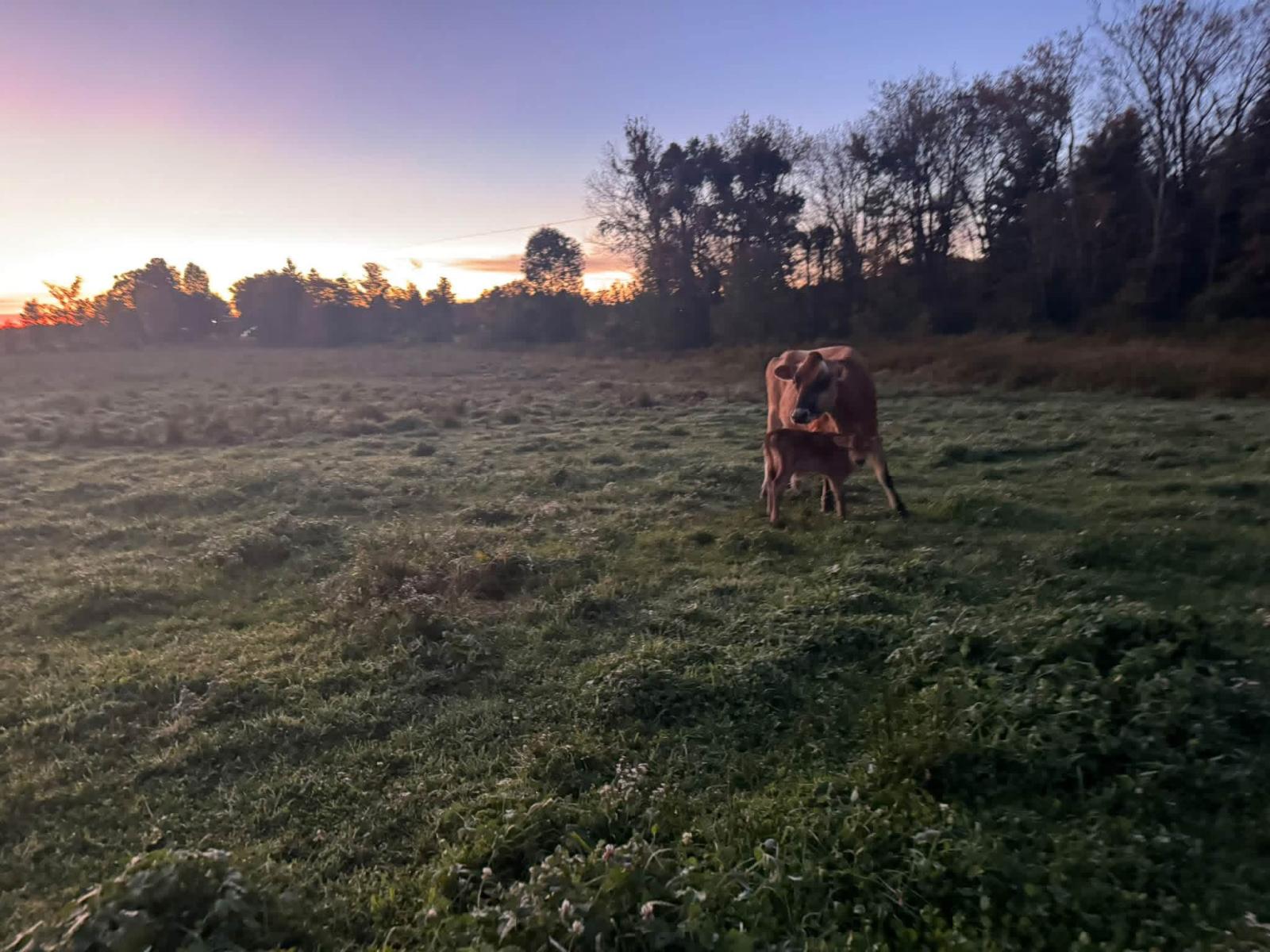
Morgan and Nathan Gilmore are unquestionably doing their part. Just outside Girard, the Gilmores own and operate Steel Toe Farm. Named to honor their day jobs with their family's concrete business, as Morgan explains it, the farm was a bit of a "happy accident" after purchasing some vacant land in 2016 in their attempts to get some space from the rest of the world.
"Little did we know, 10 years later we would be welcoming everyone to our little slice of heaven," says Morgan. After building their home, Morgan wanted goats. "As all basic girls do," she quips. So, Nathan built a barn for their first two goats. Since he always loved cows, they decided to buy one of those, too. They started with Jersey cows because, as Morgan puts it, they were "the cutest ones." It was the right choice. They quickly fell in love with their Jerseys, which she describes as "gentle giants" with "the best personalities" and a curious nature.
An added bonus: their cows produce A2/A2 milk, a trait more common in Jerseys and increasingly popular with those who have dairy sensitivities. A 2023 study for Food Science and Biotechnology journal notes that "researchers believe that A2 milk can be easily digested by the human body" as it doesn't include the A1 protein that, for some, causes "inflammation and discomfort upon consumption."
Before long, Nate began milking their cow and they began sharing it with their neighbors.
"Finally, we decided we would get set up to sell to the public," Morgan says. "Word spread like wildfire and one cow led to two which led to five – and three years later, we are currently milking nine cows [from a herd of 20]." This nets them about 30 gallons a day which they sell directly to customers who bring their own jars or purchase them in plastic containers offered in their self-serve fridge.
There have been challenges, of course. As noted, farming isn't cheap. They also happened to be growing their herd during a cow shortage when a single head was $2,700. They searched for grants to help alleviate the costs of, say, building a new barn or purchasing their pasteurizer, but time and time again they discovered they weren't eligible for many of them. "We were too small," Morgan says. "The funding just is not there for small startup farms that actually need help starting up." Then there's the time invested. They both work full-time jobs on top of their farming duties and sometimes it feels like working is all they do. "Dairy farming is not exactly light duty either," she adds.
But the hard work is paying off. After initially planning to get into making cheese, they shifted instead to gelato. The process is two-part. "Typically [on] Thursdays, I gather about 20 gallons of milk, organic cane sugar, organic A2/A2 milk powder, and egg yolks, add it into the pasteurizer, and heat it up and let it cook," Morgan explains. The mixture then goes into their cooling tank before running it one gallon at a time through their batch freezer the following day.
An added challenge: they never include artificial dyes and strive to find additives that are as clean as possible, going for organic or locally sourced ingredients: chocolate from Edinboro Chocolaterie, locally sourced maple syrup, frosted pecans from Great Lakes Popcorn, and jams from Byler Canning Company.
"We are really proud to say that our gelato is worry-free for those looking for a clean, sweet treat," Morgan says, adding that she loves hearing from customers who haven't been able to enjoy dairy treats but have had luck with their gelato.
As for the flavors, they are all trial and error with Morgan herself as the main taste-tester. Currently, they have about 20 flavors on rotation. For autumn flavors, she recommends pumpkin pie and caramel apple crisp. She's also working on one for Thanksgiving that includes orange marmalade, cranberry sauce, and frosted pecans.
The hype is no joke. Back when they were building their home, Morgan and Nathan crossed paths with Chip and Joanna Gaines of HGTV fame. About a year ago, Morgan sent Chip a message inquiring if he knew any sharks who might want to invest in their "next adventure."
"He said, 'Whatcha got?' We proceeded to explain to him how there is this used pasteurizer for sale and it would really take our little farm business to the next level, both for gelato and pasteurizing milk for those who prefer it," Morgan says. Gaines was on board. "A month later, $20,000 shows up." They traveled to DuBois to get the equipment and also visited their now-friends at Lane's End Creamery to see their gelato operation. There, they were shown the ins and outs of their farm.
Recently, their gelato was accepted to Chip and Joanna Gaines' 11th annual Silobration at the Magnolia Market in Waco, Texas, and in October, they trucked down 3,000 cups of their gelato for the four-day event. "Talk about full circle," Morgan remarks.
As for what's ahead for Steel Toe Farm? Well… a lot. Their short-term goals are simply to keep going: expand milk sales into local cafes and shops, grow the community on their farm, and add new products such as butter. As for long-term?
"We would really like to expand into a larger store," says Morgan. They want to become a third space for people, a community farm "where everyone feels welcome to shop and linger." She envisions a cafe and coffee shop, an expanded market for clean and local foods, outdoor seating and music, and a low-cost gathering space for events and activities.
"Something that would really encourage community as we feel we have lost that sense of community lately," Morgan says.
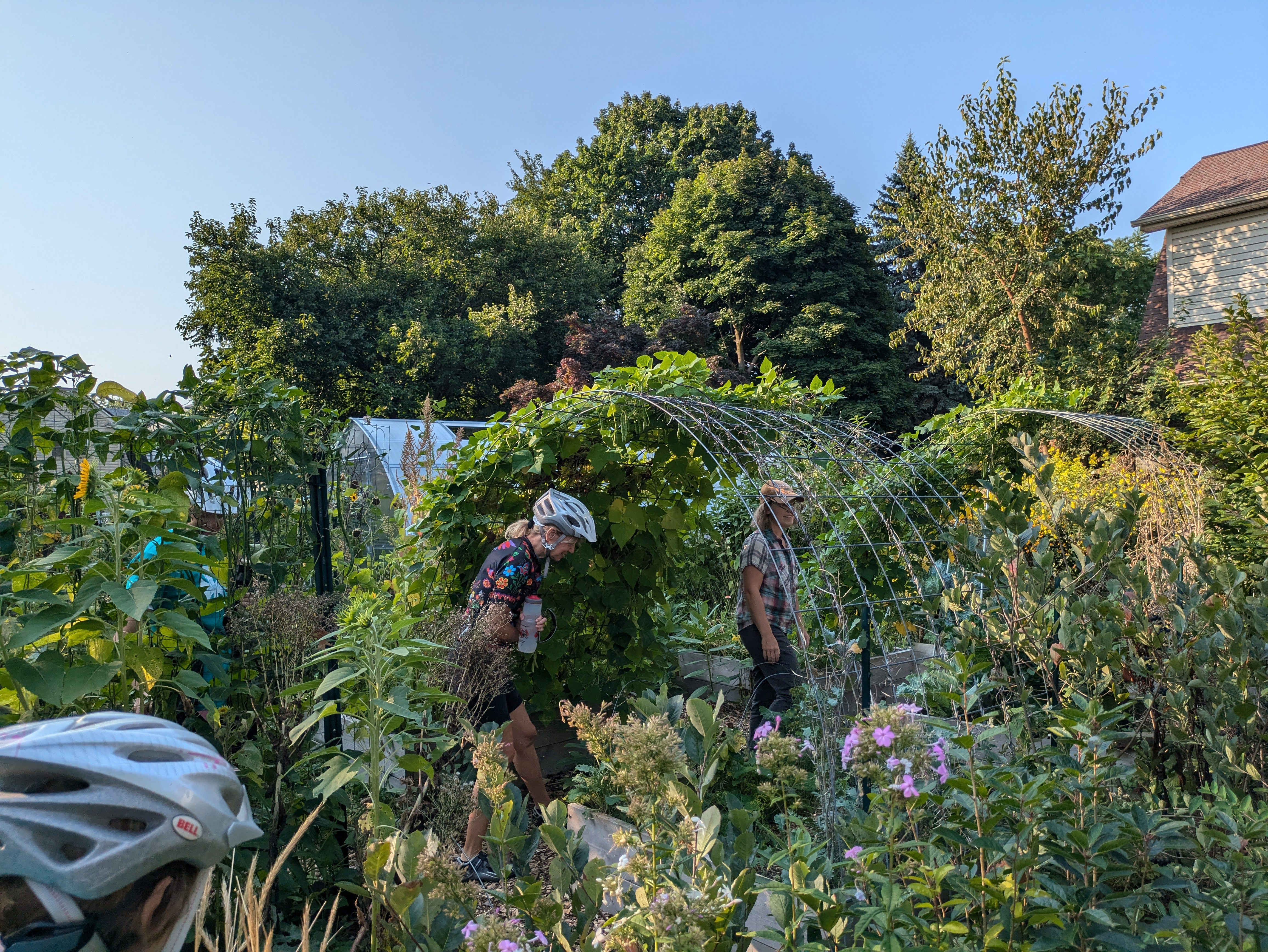
Wildfield Urban Farm, nestled between houses on Erie's east side, brings city neighborhoods into the ecosystem conversation. Offering seasonal fruits and vegetables, cut flower arrangements, fresh handmade wreaths, and seedlings and sprouts for sale – Wildfield offers year round local growth. (Photo: Erin Phillips)
Since 2017, Stephanie Ciner has operated Wild Field Urban Farm on East Seventh Street, nestled between Reed and Ash. Before moving to Erie, she lived in Philadelphia where she discovered urban farming and gardening.
"[It] was the most meaningful way that I could provide food for myself and connect with the ecosystem around me," Ciner says. "Humans, plants, animals, insects, soil – the whole living world."
Being out in the world in a busy neighborhood also helped her get to know her neighbors and make new friends, as they grew, shared, and prepared food together. "I was hooked," she recalls. She then spent several years working on farms to learn the skills needed to start her own project and, when she moved to Erie, that is precisely what she did.
"Our city has lots of urban space and a high need for fresh foods and connection to our urban landscape," Ciner explains. Farming, she believes, is an easy and fun pathway into that.
Urban farming has its own unique set of challenges. "Urban soil is always a challenge," she says. "Dealing with layers of trash and rubble, low fertility, [and] contamination. There's also limited space plus the added stress of wanting to keep the farm presentable enough to coexist with the residential spaces around it. It can be a tricky balance."
Another challenge? There's simply a huge demand and desire for fresh food in urban areas. "[There is also] dealing with the larger systems of poverty, redlining, distance to grocery stores, cost of food, and being someone who is producing food on a very small scale with the intention of sharing it as much as I can, but also earning enough to sustain myself and the farm." Again, it's finding the balance.
For products, Wild Field Urban Farm offers seasonal fruits and vegetables as well as cut flower arrangements, fresh wreaths in December, and seedling plants in the spring. They also offer educational workshops. Ciner emphasizes the importance of including the area's youth in such activities. "I worked for many years as a gardener with Erie's Public Schools and spending time with young people outdoors planting, tending, and harvesting is the most rewarding and enjoyable work ever," she says.
"It's a place where our intuitive desire to plant a seed, take care of living beings, eat food that isn't purchased from a store, see bugs and animals, watch something grow over time, [and] have the thrill of harvesting potatoes or carrots from underground [is satisfied]," Ciner continues. "The joy, curiosity, and wonder energizes me and balances the more tedious aspects of farming. Watching young people learn and make connections and try new things is amazing and a farm or garden is the perfect place for that."
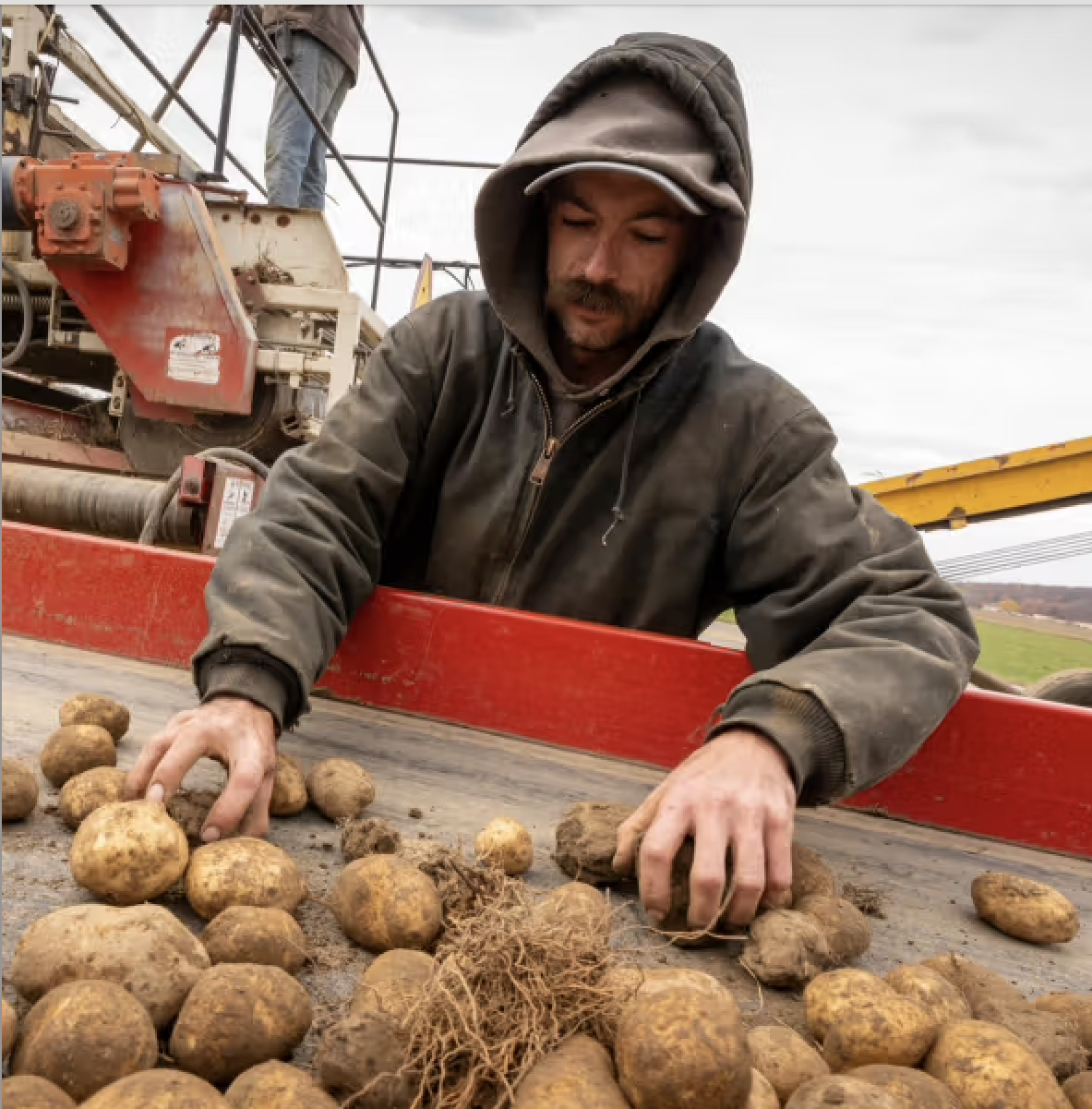
Folkland Food founders Brian Garlick and brothers Colton and Zachary Troyer have revived the legacy of Troyer Farms and pivoted the scope of the business to feature organically grown potatoes turned into gourmet frozen french fries. (Contributed photo)
Folkland Foods, located in Waterford, says that their mission is to "ignite passion in organic, regenerative farming and unite urban and rural communities with what we all deserve – real food." Co-founded by Brian Garlick along with brothers Colton and Zachary Troyer – grandsons of Clifford Troyer who co-founded Troyer Farms with his own brothers and produced the legendary local potato chip brand – they had been searching for a way to continue the family legacy and get their own brand going in Erie County.
As Zachary explains it, "[W]e also have had a huge interest in organic and regenerative farming, and real food ingredients, so most of our conversations revolved around a marriage between these things." He and Colton, like many, were increasingly cynical about large food companies and the products dominating our grocery store landscape. Their goal was to build a brand where they did things the right way, for the right reasons in a way that consumers could trust. Perhaps unsurprisingly, considering their family history, they initially considered potato chips – that is until they saw a significant gap in the organic market: frozen french fries.
"[W]e had both moved back to Erie and had begun to run the farm, with this idea burning a hole in our back pocket," Zachary says. When co-founder Brian Garlick moved back to Erie, he had the know-how to build a facility and make products for retail brands. They discussed quite a few ideas, but it kept coming back to french fries.
Since the beginning, their social media presence has been demystifying the journey of a potato from the field to the grocery store freezer, educating followers on organic and regenerative farming along the way.
"It has been a big learning experience, and we are learning to strike the balance between marketing and education, but that was the intention," confirms Zachary. He explains how growing up with more conventional potato farming meant that they had personally been exposed to large amounts of synthetic pesticides and witnessed the effects of soil degradation over time. There were also health concerns. "Our mom also had an aggressive form of cancer linked with pesticide exposure," he adds. He didn't have a change of heart overnight though.
"For me personally," he says, "it has been a slow and winding path from denial and defense of conventional practices to now ideologically committed to advancing organic and creating a market for other farmers to make the transition."
They make a concerted effort to not criticize or look down on conventional farming and farmers and instead highlight the positives of organic and regenerative farming practices, which he sees as offering a better economic future for struggling family farms. The quick success of Folkland though, he believes, demonstrates that "consumers are absolutely willing to support these kinds of practices."
Much of what they have learned came from the previous generations of Troyers, including their father, Mark Troyer, described on their website as "the man, the myth, and the legend." For one, he always encouraged them to pursue their entrepreneurial endeavors and dream big.
"Growing up here we also got a big dose of general business know-how in finance, people, operations," Zachary explains. From a young age, they were given a lot of responsibility, but also given the room to make mistakes and learn from them. Their father still uses old adages repeated by their grandfather as well, advice that Zachary says still holds up. It was their grandfather, after all, who took vertical integration to "an absurd level" by growing their own potatoes, constructing the factory with their own team, and doing much of their own direct distribution.
"That all took a lot of energy away from competing in the consumer marketplace and world that was changing rapidly," reflects Zachary. "The nature of people, relationships, and business do stay very much the same, they just look different in modern life," he reflects, adding that Folkland is much more vertically integrated than most brands, but it always comes down to focusing on the product and brand first and foremost.
What advice would he give to a high school student who wants to farm? That mission is the nearest to his heart. "Whole generations of farm kids have been talked out of getting into farming with an industry that tells them get big or get out," Zachary says. "My advice is get different and find the most direct market to consumers you can."
Learn about what consumers want. Be open-minded. Figure out where you can bring value. Find the farmers who are already doing it and learn from them, even if that means starting a career in agriculture elsewhere to gain experience and then returning home.
As for the future of Folkland Foods? In the short term, they are looking to expand their fries and tots across the entire United States, grow their team, and make good on their promises. Long term, they have dreams of expanding their mission and brand standards into any food category that they view as an opportunity. That means other potato products, he confirms, but likely unrelated products too.
"We view ourselves as a food and agriculture brand, building the infrastructure to make food products as minimally processed and traditionally as possible, and then building the supply chain to supply it with organic, regenerative ingredients," he explains. "If even a fraction of this becomes reality, it will make a very large impact. We want to see our local community thrive and create an environment that provides real fulfilling work and opportunity. That's the long term goal."
Jonathan Burdick runs the public history project Rust & Dirt. He can be reached at jburdick@eriereader.com