Fright at First Sight: Why We Are Drawn to Fear for Fun
Local horror buffs share their childhood gateway scares and current favorites

Many of us remember our earliest childhood scares: a creaking floorboard late at night, a flicker of a shadow that inspired the worst in our imaginations, a nightmare that seemed all too real. For some, it was from a story read to us or an episode of The Twilight Zone, or a movie we watched through our fingertips.
I remember vividly the first scary movies that I caught glimpses of before I was allowed. What I saw of The Terminator led to a nightmare where I was pursued by a relentless T-800 in a dark and rainy parking lot. The glimpses of the twin girls in The Shining left me more unsettled than frightened. The opening to A Nightmare on Elm Street? Forget ever sleeping again. But I did notice something early on. I sort of liked the feeling.
At my elementary school library, we had exactly one copy of Scary Stories to Tell in the Dark written by Alvin Schwartz and illustrated by Stephen Gammell. I borrowed it often. Really, as scary as those short stories were, it was Gammell's surreal illustrations that were the most haunting.
"Telling scary stories is something people have done for thousands of years, for most of us like being scared in that way," Schwartz wrote in the preface, adding that fear without danger is what made stories like his enjoyable.
Indeed, the ancient Iliad is filled with psychological and supernatural horror. The demonic Grendel haunts the epic Middle Ages poem Beowulf. Then, of course, many recall when they first discovered the dark and disturbing 19th century tales of the Brothers Grimm, revealing the true origins of beloved childhood stories. After the advent of film, silent films such as The Cabinet of Dr. Caligari (1920) and Nosferatu (1922) spooked and delighted audiences as each subsequent generation of filmmakers innovated and reinvented the genre for theater-goers.
Fear, filmmaker John Carpenter has said, is a universal language and scary stories contain both external and internal horrors. "Monsters in movies are us, always us, one way or the other," he explained in a 2011 interview. "The part that wants to destroy. The part of us that's vicious and cruel. We express these in our stories as these monsters out there."
Lauren Shoemaker, English professor, co-owner of Werner Books and Coffee, and 40 Under 40 Class of 2023 alum, holds a Horror Book Club on the second Sunday of every month at her and her husband's Liberty Plaza store. Literature, she says, asks us about the human experience of which fear is a significant part.
"[F]ear reveals much about some human universals as well as particular experiences based on our identities," Shoemaker explains. "While many of us might fear death or physical harm, some fears are tied directly to experiences of minority categories of gender, race, ability, class, sexuality, [and] age."
Horror stories can be an exercise in empathy. Shoemaker notes how Rosemary's Baby serves as "a haunting metaphor for the loss of control of one's body during pregnancy" and how the more recent Natural Beauty by Ling Ling Huang, a recent Horror Book Club pick, explores themes of beauty culture, colonialism, and capitalism.
Margaret Dieudonne, director of the Eerie Horror Fest and 40 Under 40 Class of 2024 alum, says that horror can "be a way for folks to learn about other cultures and what can be scary for someone else." She cites the popularity of 2025's Sinners and its reflection on the horrors of 1930s Mississippi beyond the film's vampires. Horror also simply gives the audience "a reason to experience a world that is more horrifying than what they have ever seen, so fantastical that their day-to-day doesn't seem as bad." It can help people process trauma and grief too – which since the passing of her mother, Dieudonne says, has helped her and her father.
"Lastly, it's a plain old adrenaline rush," she adds. A jump scare, she stresses, especially in a movie theater full of people, is just a whole lot of fun.
Illustrator and graphic designer Mark Kosobucki is the art director for the Eerie Horror Fest. He also designs the Erie Reader's annual Halloween issue cover. For him, horror is about the escape. "It's fun to sit down for 95 minutes and exit reality for a little bit," he says. Part of the enjoyment as one gets older is the challenge of chasing the thrill of those childhood scares. "Because," he continues, "nothing really scares you as an adult the way it did when you were a kid."
For Shoemaker, she traces her love of horror back to a childhood viewing of Poltergeist with her family. As she was 7 years old, perhaps not surprisingly, she hid behind the furniture during some of the more frightening scenes. After all, Poltergeist was one of the PG movies (along with Gremlins and Indiana Jones and the Temple of Doom) that inspired the creation of the PG-13 rating. It wasn't the maggots in the meat or the skeletons in the muddy pool water that scared Shoemaker the most either. It was the ghosts.
"The floating lights down the staircase and the furniture stacked in the kitchen were scenes I'd rewind to over and over again on the VHS tape we had of the film," she remembers. Her uncle tried to explain some of the special effects to help lessen the fright, but Shoemaker's childhood imagination got the best of her. For years afterwards, her bedroom was a clown-free zone and any television static left her unnerved.
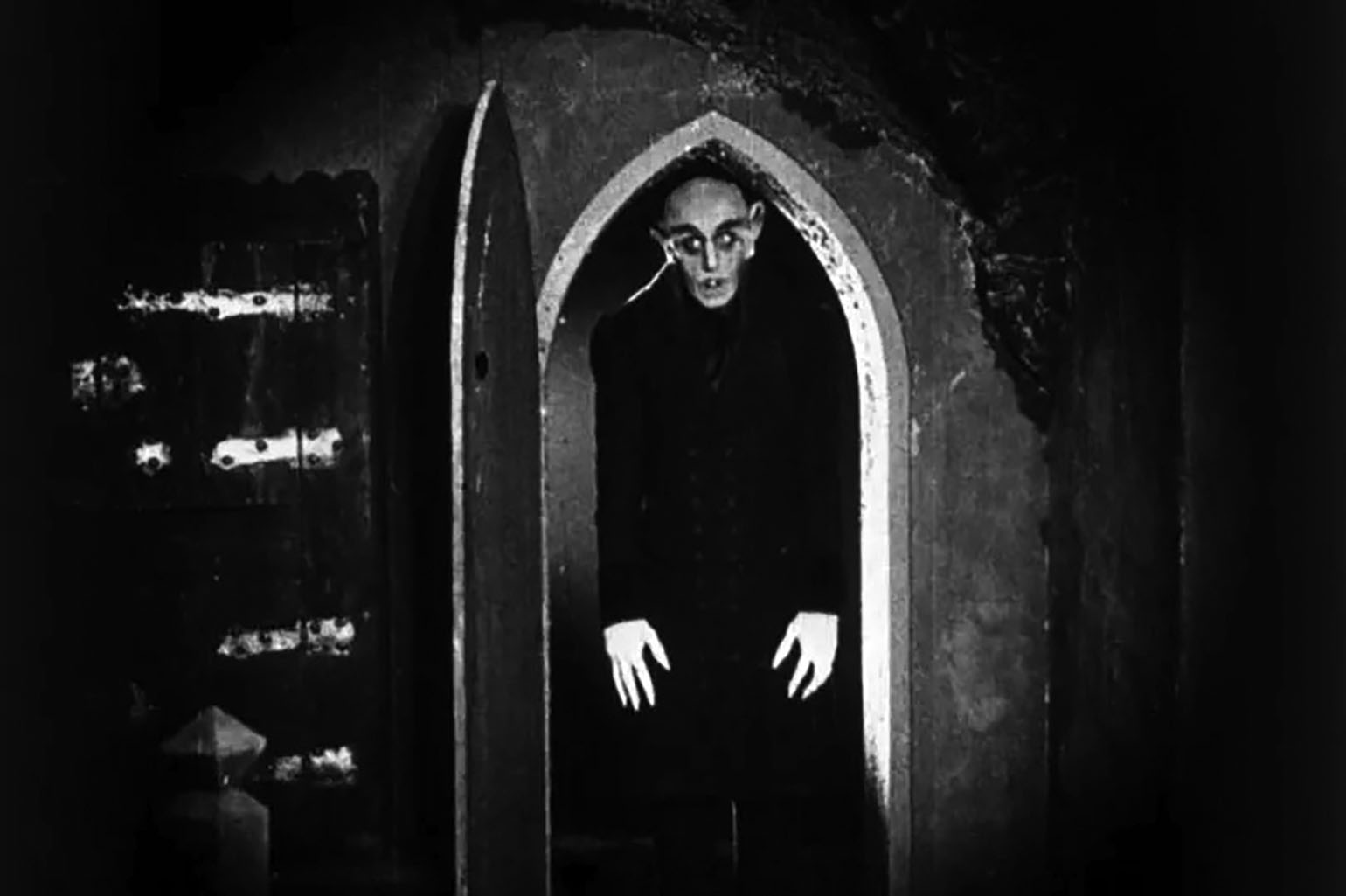
We all have formative memories of one of the first times a creepy movie scared us out of our wits – for some of us, these childhood frights eventually developed into a lifelong fascination with all things horror. (Public Domain)
For some, it's baffling that people actively seek out such spooky sensations. A 2025 YouGov poll found that horror is the least liked film genre. Almost half of Americans say they either dislike or outright hate horror movies. And yes, it can be difficult to explain. In Jason Zinoman's 2011 horror history Shock Value, he explains it as fear being personal. What frightens each of us is just as complex and nuanced as what we find funny or beautiful or moving. Fear also has the ability to kickstart some internal instincts. "One of the central pleasures of getting scared is that it focuses the mind," Zinoman writes. "When you experience fear, you forget the rest of the world. This intensity fixes you in the present tense." If it's a good horror movie, it'll make you think. If it's a great one? It'll stop you in your tracks.
This is sometimes called recreational fear. It's terror experienced in a controlled environment. Your brain is processing something as dangerous and the adrenaline and flight-or-fight kick in – all while knowing that you are physically safe. It's like a roller coaster. You know the roller coaster will end soon just as you know you can close your eyes or turn off the movie if the feelings are too intense or overwhelming.
Horror also helps us understand the world around us. It often reflects the moment in which it is created. Michael Mallory, author of Essential Horror Movies, expounds on this idea, writing that the "enduring appeal of the horror film is because the nightmares they present are reflective of their times, tapping into society's collective fears at any given moment in history."
Horror is an extremely broad category too. The 2025 poll had respondents rank 15 different subgenres of horror along with decades. Comedy-horror, psychological, and paranormal rounded out the top favorites while (perhaps no surprise) gore, body horror, and torture were ranked at the bottom.
Most horror fans can easily identify their favorites. For instance, Poltergeist was the standard that Shoemaker measured other horror movies against for many years. She admittedly turned up her nose at slashers and horror-comedies. "I wanted that domestic disruption and spooky specters," she admits. She found gory violence and terror for laughs to be "cheap versions of the real thing" and only came to appreciate some of these other horror subgenres more as an adult.
Kosobucki started at a young age with Tales from the Crypt comics and the animated Ghostbusters television show. While it may have been marketed as a show for kids, it has some genuinely scary episodes. As an adult, he prefers those scary movies that don't take themselves too seriously. "Evil Dead 2 is a perfect example," he says. "It's got its horror chops but I'm laughing at its ridiculousness." He also cites Frank Henenlotter's Basket Case (1982), Brain Damage (1988), and anything Roger Corman was attached to as other examples.
Dieudonne has core memories of her and her mother borrowing movies from the Miami-Dade County Public Library. She has fond memories of watching films like Stanley Kubrick's The Shining and Alfred Hitchcock's The Birds. "[I didn't] even know the term 'horror' yet," she recalls fondly. "I was just getting a chance to hang out with my mom."
Nostalgia and the communal aspects are very much part of the horror movie experience. From childhood memories, to the shared gasps and yelps within a theater, or merely the quiet tension of watching a scary movie at home in a dark room late at night with friends or a significant other.
For Shoemaker, supernatural horror films have simply become a language her family speaks, which she traces as far back as to when she and her sister bonded over books that they "wore to tatters" such as In a Dark, Dark Room and Other Scary Stories by Alvin Schwartz and the Scholastic Book Fair "deep cut of the late 1980s" It's Halloween by Jack Prelutsky, a childhood favorite she loves sharing with young people every Halloween.
As for what recent horror movies have really stuck with them? Dieudonne notes Curry Barker's breakout hit Obsession, as well as the adaptation of Stephen King's The Long Walk, which she said really pulled on her heart strings. Shoemaker seconds Obsession along with Parasite and I Saw the TV Glow, noting that they "are all examples of how experiences of fear are shaped by our identities." Kosobucki says he's always behind on current horror movies, but really enjoyed 2018's Antrum: The Deadliest Film Ever Made. "[It's] about two kids who are going to dig a hole to hell and it's hyped as a cursed movie that's supposed to kill you after you watch it," he explains. "I guess it's a delayed kind of thing," he adds with a shrug. "I'll let you know if I die from it or not."
For books, Dieudonne likes Rebecca by Daphne du Maurier as well as 2018's Dread Nation. "It's a revisionist history … that talks about what would have happened if the Civil War didn't end due to a surrender but instead because of a disease that turned corpses into zombies," she says. Shoemaker recommends Stay Buried by Jennifer McMahon as "great, spooky historical fiction" with a "New England autumn vibe" and also believes I'll Watch Your Baby by Neena Viel, which "highlights the structural obstacles for Black mothers with supernatural elements," didn't receive enough hype this year.
Perhaps the scariest part of our lives this Halloween season though is how much we are paying for everything nowadays. If you need a month to take a break from all the streaming subscriptions to save a few bucks, October is the perfect time, as there are plenty of free streaming options with creepy offerings – and those added advertisements make for the perfect time to pop some more popcorn or take a deep breath anyway.
On Tubi, you can find classic episodes of The Twilight Zone and Are You Afraid of the Dark?, campy classics like Killer Klowns from Outer Space, Fright Night, and Night of the Comet, as well as more disturbing classics including The Texas Chain Saw Massacre and Hellraiser. The Roku Channel has two Alfred Hitchcock anthology shows or you can binge a Sam Neill tribute with In the Mouth of Madness, Dead Calm, and Daybreakers. PlutoTV has the most diverse horror library with options ranging from classic slashers like Black Christmas and My Bloody Valentine to psychological horror such as The Changeling and The Stepfather to more modern fare such as Smile, The Babadook, and The Witch.
Or, if you are looking for a communal experience, be sure to check out 1959's Golden Age horror House on Haunted Hill on screen at the Erie Playhouse presented as a fundraiser by Eerie Horror Fest.
Just remember, whether you're watching Linus skipping trick-or-treat to hold a vigil in It's the Great Pumpkin, Charlie Brown or Laurie Strode being relentlessly pursued by Michael Myers in Halloween, find that level of recreational fear that works for you… and then maybe push it just a little bit further this year.
Jonathan Burdick runs the public history project Rust & Dirt. He can be reached at jburdick@eriereader.com