Local Family Flower Farm Growing Nature's Love Letters
Why locally-grown blooms are better for the Earth
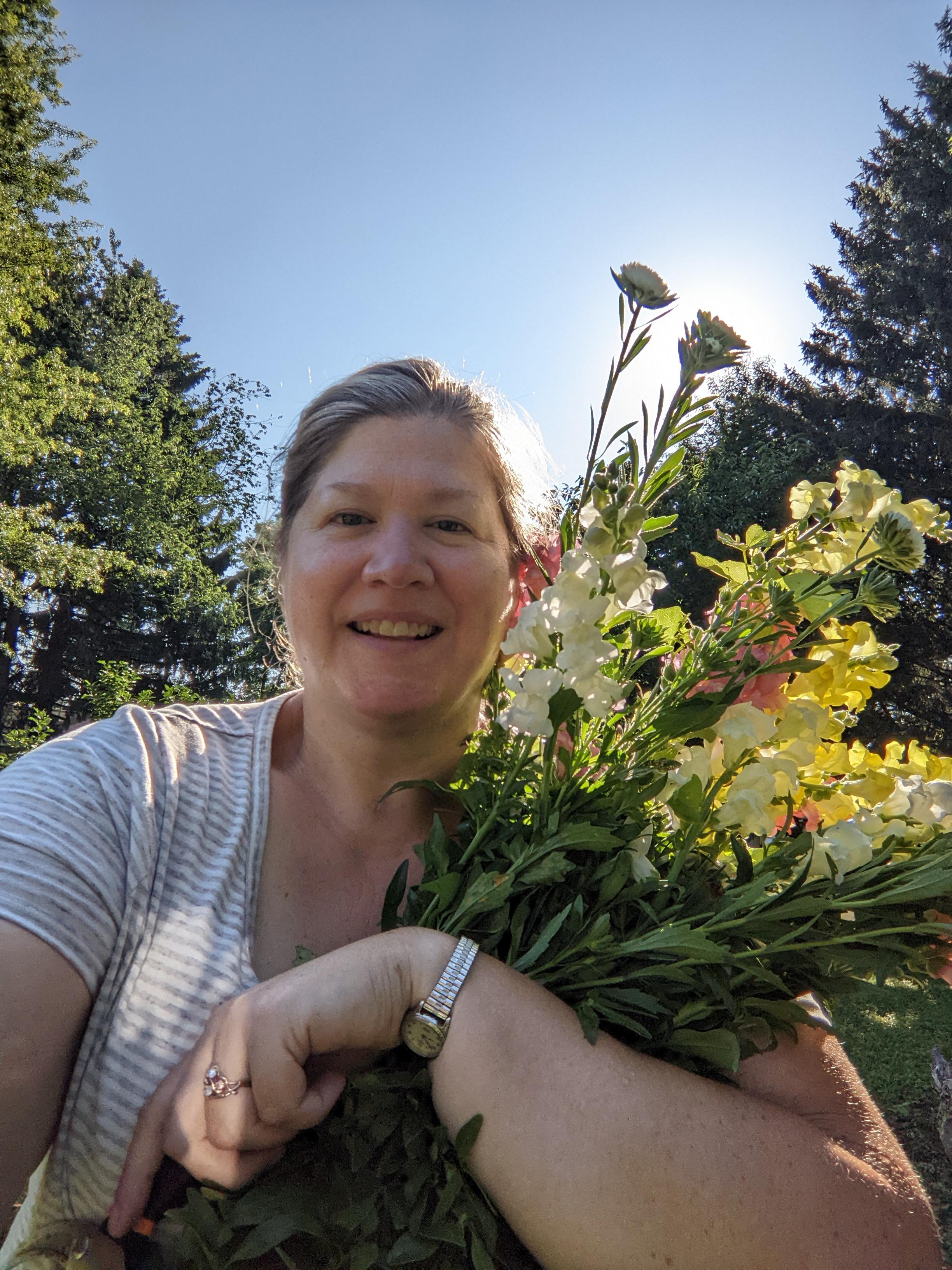
You may have noticed there is a growing crop of businesses around the Erie area: locally grown flowers. The slow flower movement, much like the local food movement, encourages consumers to question the origins and impact of the flowers they buy. One local family has made it their mission to spread love through their local flowers, art, and the printed word.
During the pandemic, loveletters.ink became a collaborative partnership between mother Sue Barton and her daughter Kelly Poese. Barton, a calligrapher, has been exhibiting at art and craft shows throughout the Midwest for the past 45 years as Sue Barton, Ink. Her daughter, Poese, uses floral design as a way to combine the beauty of the natural world and the expression of emotions such as love, connection, and thoughtfulness. Together, they became loveletters. Kelly's daughters Susannah and Maddy are also family entrepreneurs with their natural and eco-friendly lip balm business, The Balm Shop.
"We wanted to be outside as much as possible during the pandemic and we started just growing about 10 flower varieties and going to the local outdoor markets. Now we are growing 45 varieties and doing weddings," said Kelly Poese. Although customers are usually only purchasing local flowers during the warmer months, the flower business is a year-round process. "Every flower for the most part comes from seed," Poese said. "In January we are planting thousands of seedlings in our makeshift greenhouse, there is soil blocking, planting in the fall and early June, then mid-June is market season, and after that we are preparing dried flowers from October through Christmas."
Poese says some of the most important differences you receive when purchasing local flowers are the local economic and environmental impacts. "There is a difference in the product between the flowers in the bouquets that you buy at a florist or grocery store. Most flowers in the U.S. at nearly any time of the year come from South America and because of the lax environmental regulations, the amount and variations of pesticides, insecticides, and preservative chemicals are shocking. Buying local flowers helps support the environment and also helps local families buy their groceries," said Poese.
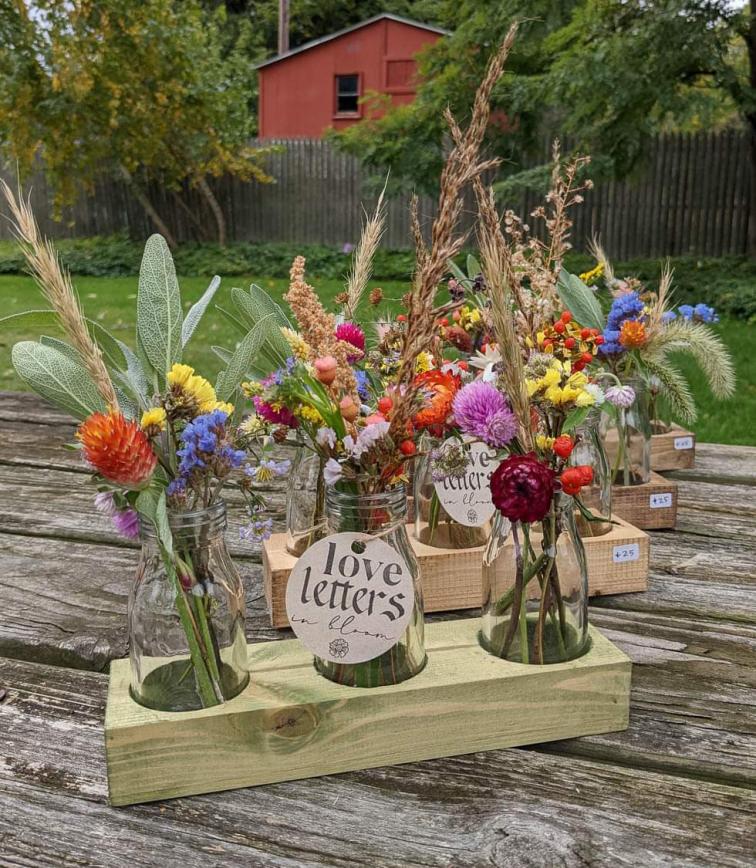 Most flower arrangements sold by grocery stores or florists have an unsustainable carbon footprint, but local blooms like loveletters are grown in harmony with the climate and aid in sustaining local biodiversity. (Image: Contributed)
The chemicals used on flowers not only stay on the blooms but also impact the local ecosystems where the flowers are grown and the people who work and live there. Once harvested, flowers are usually flown on airplanes and are part of the cold supply chain of refrigerated planes, trucks, and warehouses. Poese reports on the loveletters website that the transport of Valentine's Day flowers from Columbia to the U.S. alone incurs a global warming impact estimated to be equivalent to the annual operation of 78,000 automobiles. She points out that on top of the negative environmental impact of imported cut flowers, there are many reports of poor working conditions on many of these large-scale cut flower farms.
"Locally grown flowers are typically grown using up-to-date agricultural techniques (such as organic pest management, minimal soil till, amendments that nurture the soil biome, etc.) that close the nutrient cycle and benefit humans as well as all of the other interconnected living organisms in our environment," said Poese.
You don't have to wait for an outdoor market to purchase local flowers. Flower subscriptions are a great option for those who like to keep their house full of fresh flowers or who want to give the gift of weeks of fresh flowers delivered to a loved one. "You may not be able to give local flowers for Valentine's Day but, the surprise and joy of getting fresh, in-season flowers is even more special — even if you order them for yourself," said Poese. "Because local flowers are not genetically engineered for transit, they bring with them more vivid colors and stronger smells. We have the flexibility to grow interesting, heirloom varieties of flowers, not just the ones that will ship well."
Another benefit to the flowers grown on most small, local flower farms is that they may last longer than imported flowers (often a week or more), smell better, and the bouquets have a much wider variety of color, shapes, and sizes than you'll find in imported flowers. "Flowers figure so directly into some of our most important rituals such as weddings, graduations, anniversaries, memorial ceremonies that it's really good news that local flower farms are cropping up to provide these flowers cleanly, sustainably, with the love and care that reflects the celebrations for which they are such an integral part," said Poese.
Locally grown flowers take root in our collective soil, they clean our air, and nurture our insect and bird life. "Not only is the circle of these inputs and outputs much smaller geographically than the imported flowers, but the economic circle stays in Erie County, too. These flowers bring the joy of nature and her beauty to your home, and they bring joy to our home — the joy of making something desirable, of doing hard work together, and of financial security. When you buy our flowers, you lift up your neighbors — the love invested in local flowers flows in many directions," said Poese.
For more information about loveletters you can visit their website at loveletters.ink. You can find more about The Balm Shop at thebalmshop.com.
Amy VanScoter is the founder/owner of Infinite Love Yoga, LLC, located at 310 E. 10th St., near Downtown Erie. You can find her at infinitelove.yoga or avanscoter@gmail.com.