Norman Morrison: An Erie Quaker's Fatal War Protest
How a 1965 self-immolation left a family, hometown grappling with its meaning

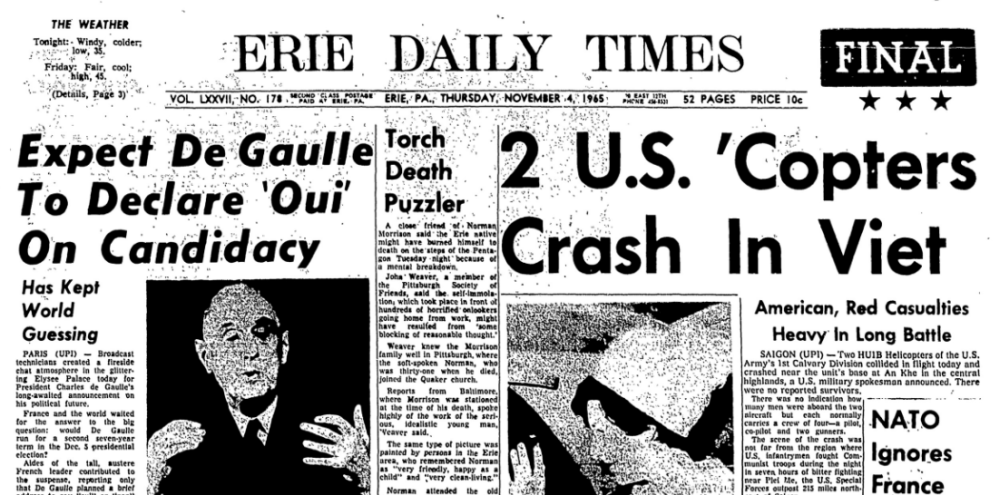
The Erie Daily Times headline announced the "torch death" of a "former Erieite." The day before, Nov. 2, 1965, a 31-year-old Quaker and pacifist named Norman Robert Morrison set himself on fire in front of the Pentagon in Washington, D.C. as he stood beneath the office windows of Secretary of Defense Robert S. McNamara.
The United Press International reported that he self-immolated in the evening during the bustle of rush hour foot traffic. It appeared to be in protest of the escalating Vietnam War. Morrison, holding his infant daughter Emily, had approached the building, doused himself in kerosene, and lit himself on fire, the "sound of a small rocket" as flames engulfed his body.
No video or photographs exist, so reports drew from eyewitness accounts. They varied. Some witnesses said he set down his daughter. Others said he handed her off. Others yet said he tossed or dropped her after setting himself on fire. Onlookers watched "horrified" while others attempted to extinguish him. "He was a mass of flames, a human torch," said one witness. He was dead by the time medics transported him to a nearby Army medical clinic only a few blocks away.
"Around supper time, I began getting phone calls telling me what happened," his wife Anne later recalled. Shortly after, she released a statement from their Baltimore home. Norman, she understood, died "to express his concern over the great loss of life and human suffering" in Vietnam. Her husband "felt that all citizens must speak their true convictions about their government's actions."
Later, she reflected on how she and Norman often discussed the contrast between their own children's health and prosperity and the suffering of children in Vietnam. It's how she explained the death to her children: their father died trying to save children like them.
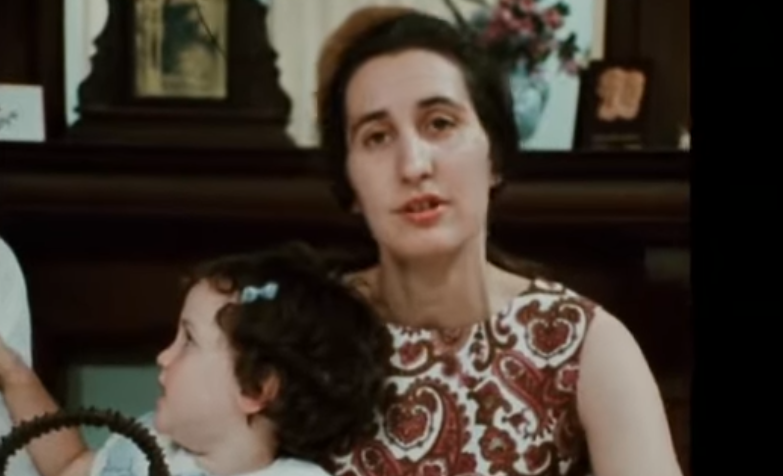
"Norman was the kind of person who was willing to make a sacrifice for others if it seemed necessary," Anne said in an interview, holding Emily in her arms. "I had no trouble understanding it at all, because of the kind of person that Norman was."
"I can't understand how he could do such a thing," said Florence Hirsch, a childhood neighbor in Erie. Allan Brick, a close friend and fellow Quaker, said it was "a sacrifice and a testimony," but he was "deeply divided" on how he felt due to involving his daughter.
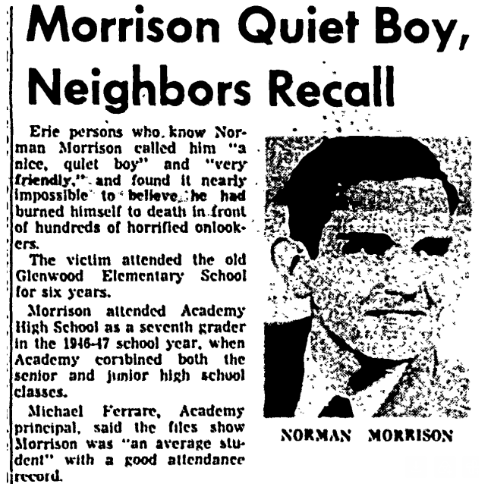
The Erie Daily Times editorialized that Morrison was a "young man no one ever expected to burn himself up." Close Erie friend John Weaver described Morrison as "soft-spoken" and "a serious, idealistic young man." He must have, Weaver assumed, had a mental breakdown that blocked his "reasonable thought." Friends and acquaintances across Erie said it was impossible to imagine the person they knew committing such an act.
It was clear though that the escalating war and deaths of innocents weighed heavily on Norman's conscience. "We had to talk him out of burning himself up last year," Baltimore friend John Paisley told UPI, saying he'd been inspired by the Vietnamese monks who self-immolated in Saigon. Other close friends pushed back against this claim though, stating he'd never given any such indication. He'd even discussed joining upcoming Thanksgiving Day anti-war demonstrations.
Norman Morrison was an international headline now, a topic of discussion in the growing schism between those desiring to help South Vietnam directly against communist aggression and those vehemently opposed to any military intervention. Public support was still on the side of intervention in 1965. Nearly 60 percent were in support and only a quarter of Americans said it was a mistake. Whatever the case, Norman's family and friends were now left to grapple with the confusion and grief over what he had done, why he had done it, and if it would even make a difference.
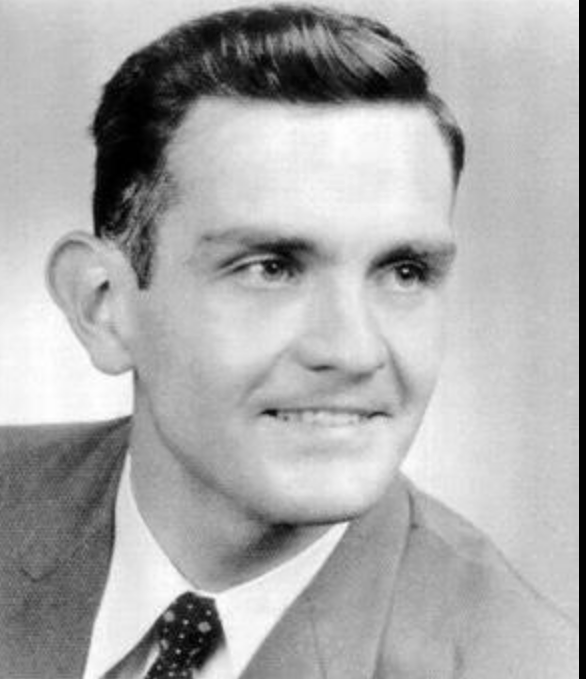
Norman Morrison was a father, husband, and Quaker pacifist who grew up in Erie and attended Glenwood Elementary and Academy High School. After having children, Morrison and his family moved to North Carolina where his involvement in the Civil Rights Movement and Vietnam war protests became an ethical priority in his life. Photo: Wikimedia Commons
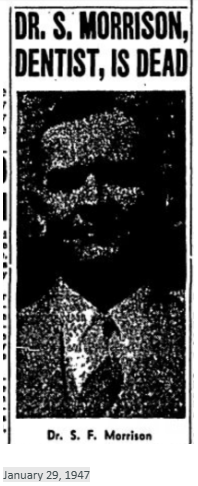
Morrison was born in Erie on Dec. 29, 1933. His father, Dr. Stanley F. Morrison, was a well-respected dentist and member of the Zem Zem Temple. He operated his dentistry practice out of their home at 2963 Peach St. His mother, Hazel (Fuller) Morrison was a "very gracious, well-educated person" who served as financial secretary at the Church of the Covenant. They were committed Presbyterians, community minded, and an "upstanding and very friendly" family. Stanley and Hazel were loving and attentive to Norman and his brother Ralph, known to "dote" on their children.
Norman was a "happy boy" in his years at Glenwood Elementary School. Those who knew him described him as nice, quiet, and serious. John Turner, a close childhood friend, said that from a young age, Morrison was always well-dressed and neat, "friendly, conscientious" and "something of an idealist." He never caused trouble and his teachers all ranked his character as "superior."
For the 1946-47 school year, he attended Academy High School. It was during this school year that tragedy struck. Stanley, who'd been dealing with a bleeding ulcer, died unexpectedly in their family home. After a few months of grieving, a teenage Norman convinced his mother to move to nearby Chautauqua, New York where they owned a summer home. There, he and Ralph completed high school. After graduating, both enrolled at the College of Wooster, a Presbyterian school in Ohio. Norman continued identifying as such, but began flirting with Quakerism for the first time.
Elsewhere, Anne Hodges Corpening finished up her psychology studies at Duke University. Born in Georgia in 1935, she was raised by her Methodist parents in western North Carolina. She was kind and open-minded and had an unforgettable and warm smile. It was while working a summer job at the Chautauqua Institution that she met Norman, who she found handsome, joyful, determined, as well as a bit intense and eccentric. In early 1957, they were engaged and wed that September.
The Erie Daily Times reported on their "Quaker wedding ceremony" which took place in North Carolina with Ralph as best man. The wedding was marked by "traditional simplicity." Anne donned "a floor length gown of ivory lace over satin" and carried a "bouquet of off-white roses and gardenias." The couple honeymooned on the North Carolina coast, traveled up north through New York, then sailed from Montreal to Scotland where they both spent a year studying at the University of Edinburgh. They then moved to Pittsburgh where he studied at the Western Theological Seminary. During these years, he'd occasionally drive to Erie, where he conducted worship services at the Church of the Covenant. As time passed though, he found himself committing more fully to Quakerism.
In the fall of 1959, with their first child, they moved to Charlotte, North Carolina where they helped establish a Quaker congregation. This was in the midst of the Civil Rights Movement and Norman and Anne fully embraced "peace and social justice" and were involved in desegregation efforts. In 1962, they moved to Baltimore, Maryland. Here, his "radical Quaker posture" often clashed with the congregation's more conservative Quakers.
By 1964, Norman and Anne had three children: Ben, Christina, and a newborn Emily. That August was the Gulf of Tonkin incident which escalated growing tensions in the region. This led to the Operation Pierce Arrow bombing campaign, followed by the Gulf of Tonkin Resolution, which essentially authorized President Lyndon B. Johnson to wage war in Vietnam.
On March 2, 1965, Operation Rolling Thunder, an aerial bombardment campaign, commenced, followed by the deployment of 3,500 Marines to Da Nang, South Vietnam the following week. Two weeks later on March 16, Alice Herz, an 82-year-old German-Jewish refugee who'd escaped Nazi Germany, set herself on fire in Detroit, Michigan in protest. By the day in November that Norman Morrison decided to do the same, around 180,000 American military personnel were in Vietnam.
According to Anne's account, he asked her that morning, "What can we do that we haven't done?" For months now, they had peacefully protested. They had prayed and held vigils. They'd lobbied politicians and written letters to newspapers and even to President Johnson himself. Yet, nothing changed. Nothing they did seemed to matter. The bombs continued to drop. More soldiers continued to be deployed.
So, on the morning of his death, he scribbled a note, "The most important thing in the world is that our faith becomes living experience and deed of life." He put on a suit jacket, packed a diaper bag, and put Emily in the car. That evening, he was dead.
The grief-stricken Anne called it his "supreme protest against war." As Anne later wrote, "[Norman was] excruciatingly aware of the suffering of innocent people in Viet Nam, and of our GIs returning wounded or in body bags." And, as she told Wooster Magazine in 2009, he was not a man of imagination, but a man of action.
Anne received a letter from her husband a few days after his death. In it, he told her he loved her and asked her not to condemn him. "For weeks, even months, I have been praying only that I be shown what I must do," he wrote. He had been shown the morning of his death.
Why he took his daughter remains a mystery. Anne speculated that it was perhaps, even if unintentionally, "a powerful symbol of the children we were killing with our bombs and napalm." Washington Post journalist Paul Hendrickson, who reported extensively on the self-immolation, ultimately concluded that Morrison's intentions are unknowable as are the facts of what exactly transpired.
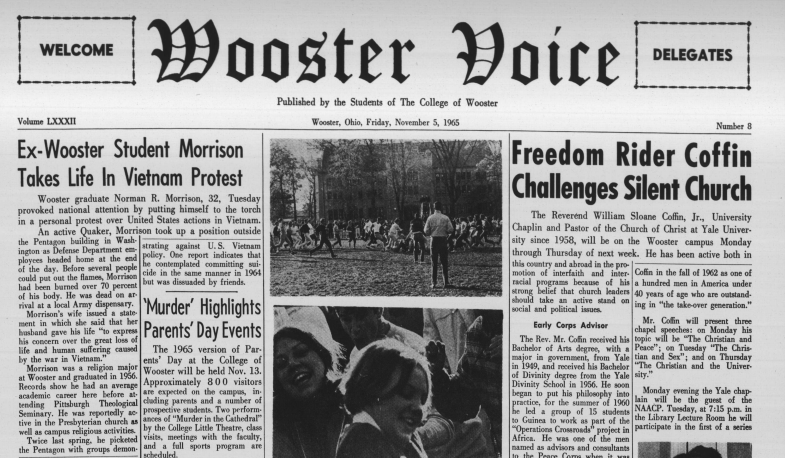
Norman's friends continued to "express shock and disbelief" as the news went international. "Each member [of our congregation] is free to act to the measure of demand in his life which he understands," a friend and devout Quaker said of Morrison's choice. Another friend said solemnly, "If he would have just stood on the steps and expressed his views he would have at least cast his voice and opinion on the land." Others criticized him as insane and a hypocrite, saying he wasn't truly a pacifist or a Quaker with his act of "self destruction" that was "the ultimate form of violent action." In Wooster's alumni bulletin, many sent letters of anger and disgust. One called it a "sick and selfish act" while another said he "debased the very principles that made this country the greatest citadel of freedom."
Others yet tried to intellectualize his suicide, arguing that it fell within the Quaker belief of self-sacrifice. "Norman saw these policies as evil," his congregation said in a statement. "He found it necessary to protest them, but must have been discouraged that the protests seemed to fall on deaf ears."
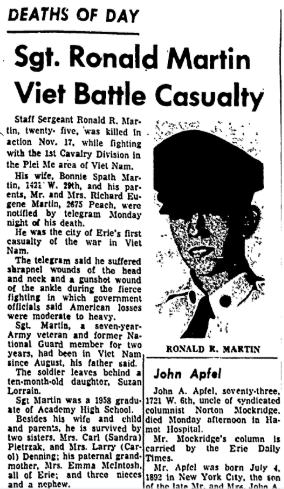
Two weeks after his death, the first Erie County resident died in Vietnam, a 1958 graduate of Academy High School. The first major battle of the war, the Battle of Ia Drang, was in its fourth day when 25-year-old Sgt. Ronald R. Martin was killed. He was described as a "dedicated soldier" who was a good husband, father, son, and brother. He loved classic cars, music, and cooking and hoped to own a restaurant one day. He also believed deeply in helping South Vietnam defend itself. Only three weeks earlier, he'd written about the stateside protests, saying he wished they understood that they weren't there to kill but to help.
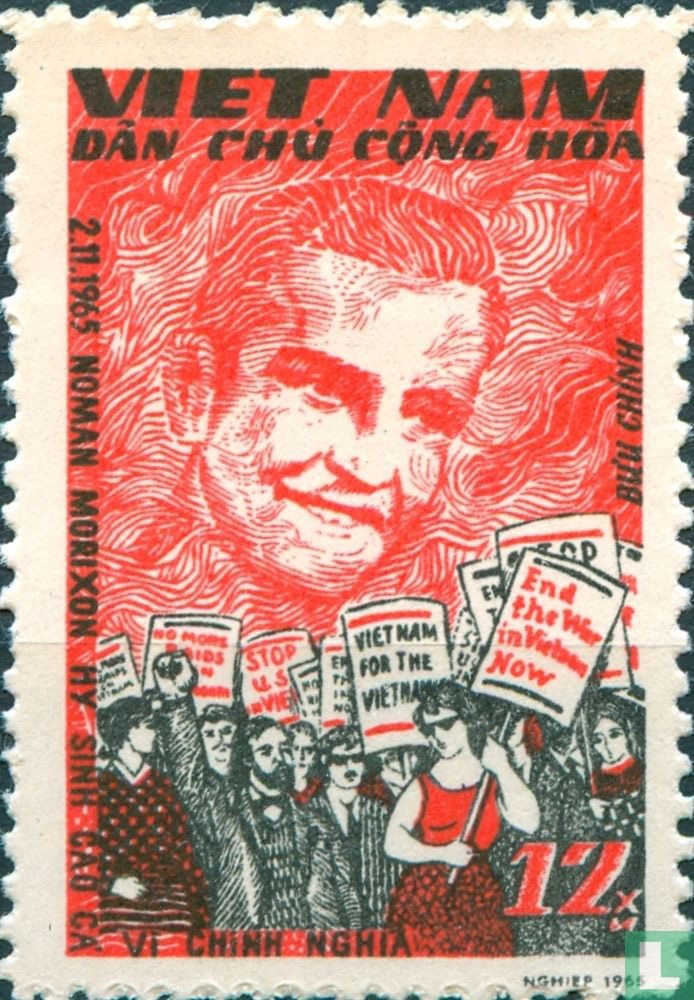
North Vietnamese leader Ho Chi Mihn used Morrison's actions as propaganda against U.S. military involvement in Vietnam, while the Vietnamese government issued a commemorative stamp featuring Morrison's likeness and a slogan that loosely translates to "Norman Morrison – the ultimate sacrifice as duty and purpose demand." Source: The Nonviolence Project - University of Wisconin-Madison
On this same day, the Erie Daily Times published a letter by Hugh P. Nesbitt. He called Morrison a "brave man" who proved that pacifists weren't "cowards" and criticized those who wrote him off as "the nut who immolated himself." Nesbitt didn't know if Morrison did the right thing. "But we can say," he continued, "he was able to get national publicity for his protest of our country's war." Below his was another letter: "Why can't we have peace? Why war with its death, destruction, disfigurement, sorrow, suffering, and ruin? War is a kind of fearful foretaste of hell."
A few days later, Erie Morning News columnist Hugh "Red" Barr wrote how Vietnam was a war "unlike any our troops have faced before." For soldiers, he wrote, it "must be agonizing to sweat and bleed in a remote jungle after reading accounts of protest marchers on the home front." Erie columnist Ed Mathews said it was clear this was a major war. "The death of the first local soldier ... brings the war even more to our attention," he wrote. "The unfortunate outlook is that it is going to get much worse before it ever gets better." The division was already clear.
Around this time, the Associated Press reported that Morrison's death was being used by the North Vietnamese government as propaganda. North Vietnamese leader Ho Chi Minh directly commented on it in an interview, saying that America could "leave at any time" and mentioning Morrison by name for his "sacrificial act … in protest against U.S. acts."
"We would not encourage these acts but for us they have a high symbolic significance," said Minh. "You have seen the suffering that the bombing is causing our people. They give us no alternative but to go on."
The Washington Post reported that Minh's government "issued a commemorative stamp" with his image and "an inscription loosely translated as 'Norman Morrison – the ultimate sacrifice as duty and purpose demand.'" NVA soldiers reportedly wore the stamp on their backpacks and civilians pasted them onto their bicycles. Schools and factories put up his photograph. When New York Times editor Harrison E. Salisbury traveled to North Vietnam the following year, he noted that people often specifically mentioned Morrison to him. Vietnamese poet Tố Hữu wrote a poem titled "Emily, My Child" about the act, while a prisoner of war was released as a "gesture honoring Norman Morrison."
It wasn't long before another self-immolation followed, this time in front of the United Nations building in New York City. A senator pointed out that "debate on our policy in Vietnam" was "a manifestation of our strength, the democratic progress." But, he countered while referencing the Morrison stamp, "Each time a protest occurs in this country, there is a concerted effort to convince the people of North Vietnam … that the majority of Americans really support the aggressive and expansionist efforts of communism." This, he argued, served to "prolong the conflict."
Thirty years later, Erie reporter Bill Welch reflected how "the clues are hard to find" as to what effect Morrison thought his death would have. The reality, Welch continued, is that Americans were still divided on Vietnam all those years later. "When all is said and done," Welch wrote, "there will still be more to say about it." Despite that, Welch alleged, it was clear that within months of Morrison's death, Secretary McNamara began to grasp what others in his administration couldn't. "That America couldn't win the war, not on the battlefield," wrote Welch. "There had been a terrible, terrible miscalculation."
McNamara spoke about Morrison on a few occasions. His death, he said, was "a tragedy not only for his family but also for me and the country." It, like the war, haunted him. His act, McNamara said, "was an outcry against the killing that was destroying the lives of so many Vietnamese and American youth."
Indeed, by the end of the war, nearly 60,000 Americans were dead – more than the total combat deaths in the Iraq, Afghanistan, Korea, Spanish-American, and Philippine-American wars and the War of 1812 combined. More than 60 of those were from Erie County. Millions of Vietnamese perished, including as many as 2 million civilians.
Anne eventually remarried and moved back to North Carolina. In 1975, the family experienced another tragedy. Ben died of cancer at age 16. This was "the deepest sorrow of her life." It also was the first time she felt anger towards Norman for having "to carry a parent's grief alone."
However, that anger played an important role in her healing journey. She told the faith-based Sojourners in 1995, "For so long after Norman died, I didn't experience or express it. It's very hard to be angry at someone who has just given his life for a cause, especially to try to stop a war. It seemed inappropriate to be angry." Now, Anne said, she had "compassion and acceptance and understanding and forgiveness."
Over those years, she remained active in the Quaker community. She continued grassroots work as a way to honor Norman. She completed a master's degree and worked for the YWCA, American Friends Service Committee, and as the director of a group home. She wrote columns in local publications, as well as a pamphlet and a memoir about her experiences.
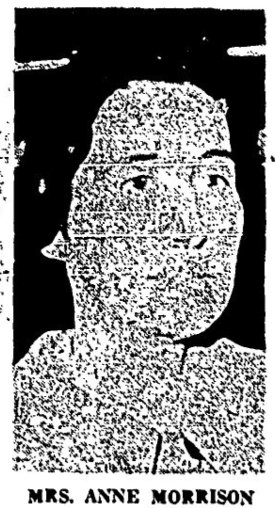
"Perhaps this is ultimately a story about healing – about how we get through our grief, doubts, and pain," she wrote in her memoir. "I learned the blessed necessity of accepting the irreversible past and forgiving both others and myself."
In 1999, Anne, Christina, and Emily traveled to Vietnam. There, they met the poet who wrote about Norman and Emily. They were shocked by how many knew the story, even the younger generation. For all three, it was a profoundly moving experience. "I felt deeply honored and appreciated for our family's sacrifice in a way that I never had been by our own culture," Christina said, adding, "The farewell note I didn't receive from [my father] is mine to write."
Emily cannot know with certainty why her father took her that day. "By involving me the way he did, I feel Norman was intrinsically asking the question, How would you feel if this child were burned too?" she later reflected in her mother's memoir. "I believe I was there with Norman ultimately to be a symbol of truth and hope, treasure and horror all together. And I am fine with my role in it."
"I realize that out of the ashes of agony and loss rose something profound," wrote Anne.
Anne died in 2024 at age 89. Her obituary read: "Despite her great losses, Anne had deep love and reverence for life and unshakable faith in God and the goodness of humanity."
Jonathan Burdick runs the public history project Rust & Dirt. He can be reached at jburdick@eriereader.com