Pain, Panic, and Progress
Responding to the overdose crisis in Erie
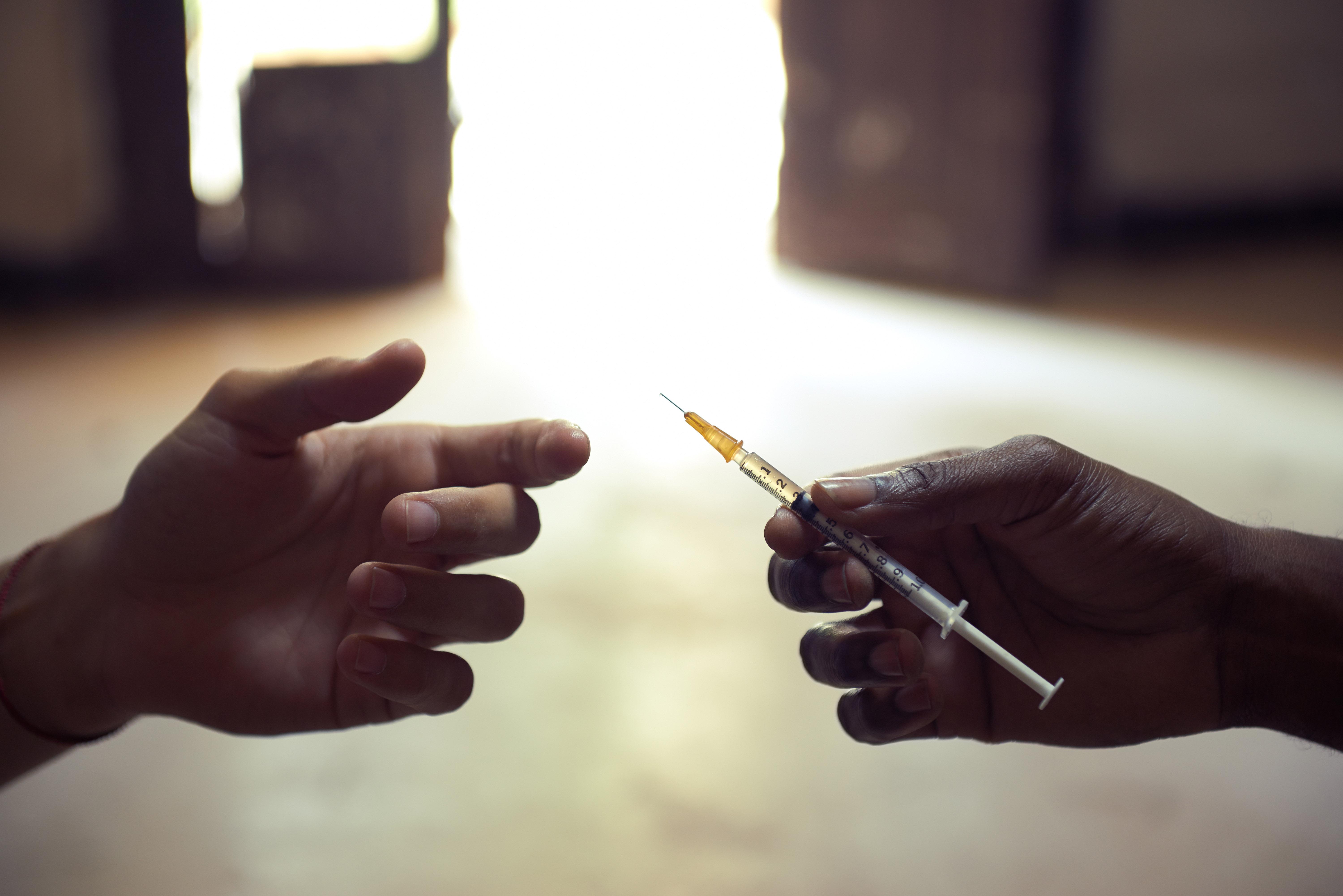
When assessing the addiction and overdose crisis in our community, it's tough not to begin with alarming statistics.
A recent report from our mayor's office and the Erie Police Department indicates that, in 2022, there were 286 opioid overdoses in our city. These led to 54 deaths, which was 19 more than the previous year. And that number might have been higher had our police not administered 226 doses of naloxone, better known by the brand name Narcan, to people in overdose situations.
Statewide, the Centers for Disease Control (CDC) listed Pennsylvania as the ninth highest state in the country for overdose deaths in 2021. The Pennsylvania Attorney General's office reports that overdoses took the lives of 5,343 Pennsylvanians that year — a 6 percent increase from 2020's tally. Perhaps surprisingly, heroin overdoses declined as fentanyl found its way into our drug supply — especially in the form of counterfeit pills.
"We are now facing, for the past five years or so, a poisoned drug supply," says Dr. Amy G. Miles, an Addiction Medicine Physician with UPMC Western Behavioral Health at Safe Harbor. "We're looking at something that is actively being contaminated." The impact of synthetic opioids — fentanyl especially — can hardly be overstated in our community. According to the CDC, it is up to 50 times stronger than heroin. It's also cheaper to manufacture and easier to transport without notice — a decisive supply-chain advantage for dealers during the COVID-19 lockdowns. Nationally, the National Safety Council reports that "overdose deaths involving synthetic opioids — including fentanyl — increased 2,524 percent between 2013 and 2021." In Pennsylvania, fentanyl was involved in 78 percent of our opioid deaths in 2021.
What's Being Done
The catastrophic impact of synthetic opioids can often overshadow the important work being done to address the crisis in our community. For example, a 2022 study in the journal Drug and Alcohol Dependence found that 80 percent of Pennsylvanians who have experienced an overdose since 2018 have survived. The study's authors attribute this success in part to the increased availability of Narcan, which they estimate makes people 11 times more likely to survive an overdose situation. A standing order passed in our state in January expanded its access to virtually anyone at risk of an overdose, or capable of assisting someone at risk. Many lives are being saved because of these changes, but because synthetic opioids often go undetected and can do unprecedented damage, the overdose numbers remain alarming.
Last December, I wrote about the legalization of fentanyl testing strips (FTS) in Pennsylvania. These strips, which allow drug users to identify the presence of the substance in a manner similar to a pregnancy test, are now available through the Erie County Office of Drug and Alcohol Abuse (ECDA). The office is also "actively pursuing a vendor to support a model similar to Narcan distribution which will provide free FTS products to the public," according to director Scott Coughenour.
Since 2016, our region's Warm Handoff Program has connected people in overdose situations with mental health professionals at the moment of crisis. Case managers from Safe Harbor and Gaudenzia Erie report to our hospitals whenever drug emergency treatment is administered to offer free, voluntary counseling to people who decide to seek additional help. UPMC Western Behavioral Health at Safe Harbor made 1,272 treatment referrals in 2022. According to executive director Mandy Fauble, "of the people who accept the Warm Handoff help, the vast, vast majority connect to treatment afterward." In January of this year, the program contacted 144 people and made 33 referrals throughout Northwestern Pennsylvania, according to the Erie County Office of Drug and Alcohol Abuse.
Moving Forward
Surprisingly, Pennsylvania is one of only 10 U.S. states where Syringe Service Programs (SSPs) are currently illegal. This is slightly misleading, because about 20 of them are currently in operation in our state in accordance with local municipal ordinances. Still, the potential effectiveness of SSPs, which are sometimes known as needle exchanges, appears encouraging. According to the CDC, they are associated with an estimated 50 percent reduction in HIV and Hepatitis-C incidence. And users of SSPs are five times more likely to enter drug treatment — and three times more likely to stop using drugs entirely than those who do not use the programs.
Presently, there is a bipartisan movement to legalize them at the state level. On a Zoom call in late April, I spoke to State Representative Jim Struzzi of Indiana County about his advocacy for syringe service programs. Struzzi, a Republican in a conservative rural district, recently co-sponsored a bill with State Representative Sara Innamorato that would amend the definition of "drug paraphernalia" so that it doesn't include syringes, needles, and other objects used to "reduce the risk of disease transmission."
Struzzi was persuaded by the effectiveness of SSPs after a visit to Prevention Point Pittsburgh, where he found that syringe services were being provided with minimal burden on law enforcement or emergency medical technicians. He was impressed by the organization's focus on recovery in addition to drug safety. In the vehicles operated by Prevention Point, drug users were provided with information about counseling and treatment options — often by specialists who are in recovery themselves — in addition to clean needles.
"When conservatives in my district ask me about these programs, I always tell them that Trump supports them," says Struzzi. This claim is broadly correct. In 2019, Health and Human Services Secretary Alex Azar publicly advocated for syringe service programs, noting that "we're in a battle between sickness and health, between life and death." Perhaps more surprisingly, Mike Pence legalized them in 2015 while governor of Indiana, in response to a shocking uptick of HIV cases in certain rural communities.
Struzzi admits that advocating for harm reduction measures like SSPs and fentanyl testing strips can be "a heavy lift" in places where people are understandably alarmed about drug use. But he defends his position with concise urgency: "You can't help people if they aren't here to help."
Diversifying Recovery Options
In her 2018 book Dopesick, which recently became a TV miniseries, author Beth Macy asserts that "among health professionals, buprenorphine is considered the gold standard for opioid use disorder because it reduces the risk of overdose death by half compared with behavioral therapy alone." Buprenorphine, which can be prescribed by a physician for up to 30 days at a time, is emerging as a useful option for people who haven't had success with other approaches to drug abuse treatment.
"You don't necessarily have to do an abstinence-based treatment first," says Dr. Amy G. Miles of UPMC Western Behavioral Health at Safe Harbor. "Instead, you can work with medication fairly near the beginning of a diagnosis, to help lower people's urges and cravings. And to help them be engaged in the other aspects of their recovery."
True to Macy's book title, medications for opioid use disorder (OUD) like buprenorphine (as well as methadone) can alleviate some of the worst symptoms of so-called "dope sickness." This can make the withdrawal period more manageable as users try to report to work or to reconnect with friends and family. In a recent article about the history of its usage, New York Times reporter German Lopez notes that when buprenorphine was deregulated in France in 1995, overdose deaths decreased by 79 percent over the next four years. In a somewhat similar spirit, the Mainstreaming Addiction Treatment Act passed nationally earlier this year, eliminating "the so-called X-waiver that physicians had long needed to prescribe buprenorphine."
To be clear, medications like buprenorphine and methadone are opioids themselves. Accordingly, organizations offering medication-based treatment for OUD must monitor their distribution closely. "Because we are a licensed facility, we have to — at minimum — have a person drug-screened once per month," says Safe Harbor's Fauble. "There are also strategies where the person is engaged in therapy. And it's not to be punitive. It's to ensure that everyone is safe."
In addition, the treatment process is a long-term one — with medication being only one part of a continuum of care. "The American Society for Addiction Medicine recommends at least one year because it takes quite a bit of time to restructure your thinking, to become engaged in other aspects of recovery, and to make long standing behavior changes," says Dr. Miles. "And that's a minimum guideline. There are people who are on it for five or 10 years without any problem. When we interact with clients, we assess their readiness for change."
I don't want to imply that medical alternatives to abstinence-based drug treatment are any sort of miracle cure — or that this approach is categorically any better than, say, working with a 12-step program. Different approaches will make sense based on the needs of different individuals. The point is that more care options are slowly becoming accessible to people who haven't found a recovery framework that works for them.
The more I learn about the overdose crisis, the more I alternate between abject despair and hope for the future. The problems we face often seem insurmountable, but there is growing agreement that we are faced with a public health crisis that can't be eliminated by force alone. When I speak to the people working hardest on this problem in our community, they strike me as compassionate and realistic. Good ideas seem to move forward at pace with the epidemic itself. Hopefully soon, they will begin to outrun it.
Dan Schank can be contacted at danschank@gmail.com